
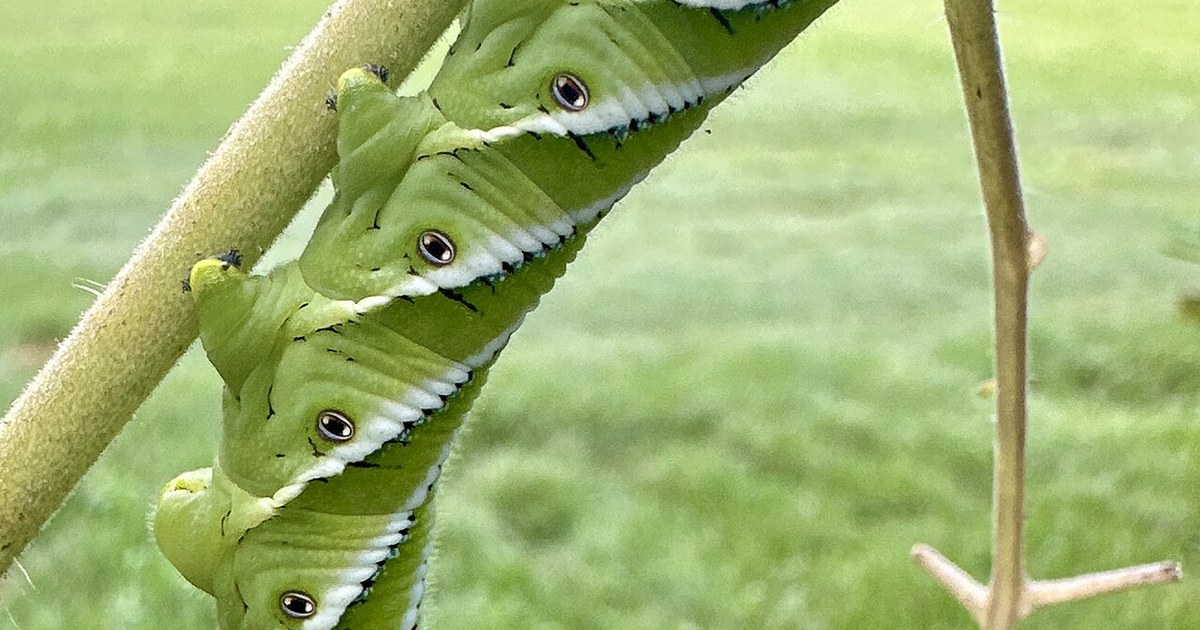
Tomato hornworms are large green caterpillars that can strip a tomato plant in days. They are hard to spot but easy to control once found.
Identifying hornworms
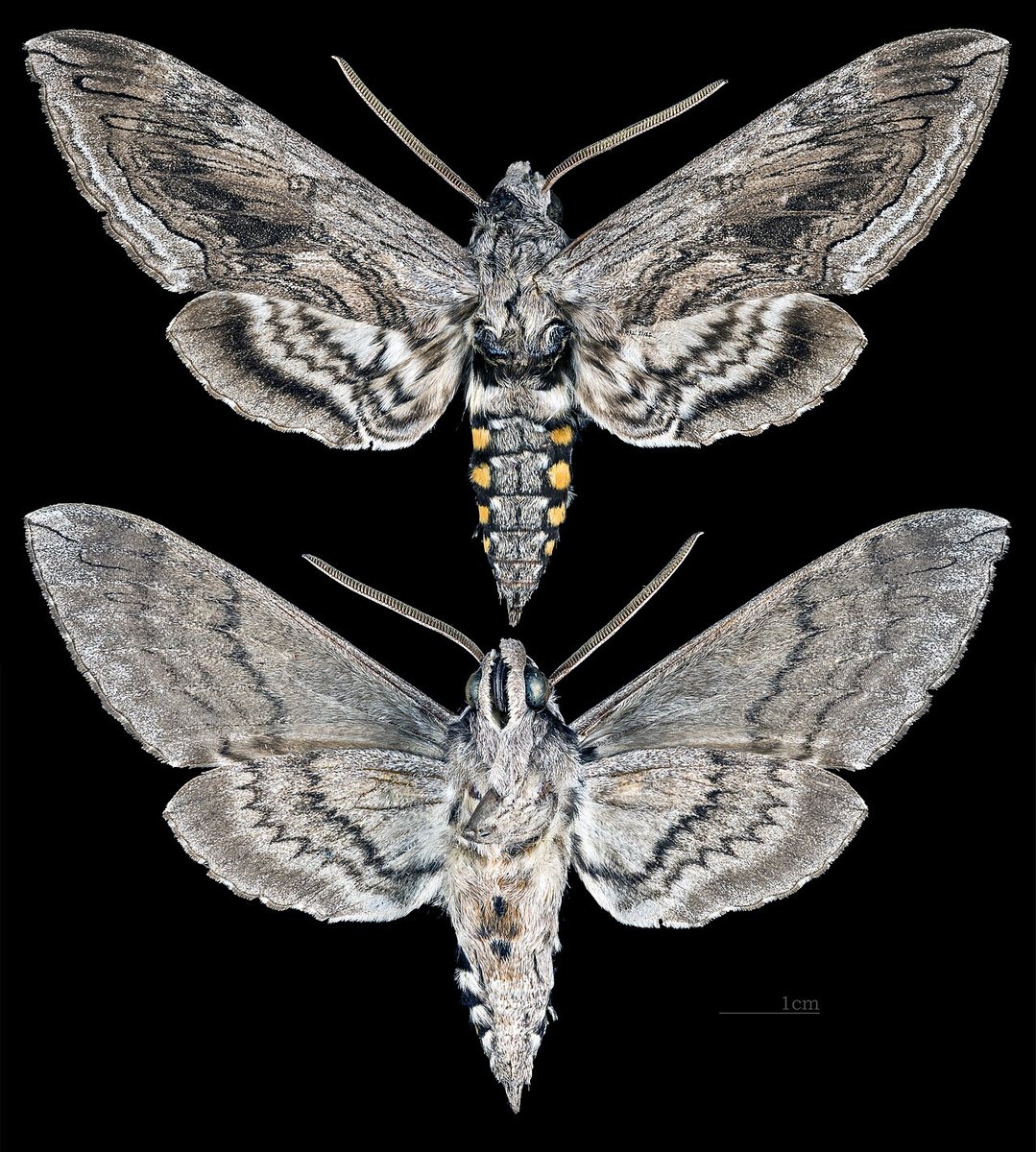
Hornworms are the larvae of the five-spotted hawk moth. They are bright green with white V-shaped markings and a horn on the rear. They grow up to 4 inches long and blend in with foliage. The first sign is usually missing leaves and dark droppings on the soil.
They feed on tomatoes, peppers, potatoes, and eggplants. A single hornworm can eat a large amount of foliage in a day. They usually appear in midsummer.
Finding them
Inspect plants in the early morning or late evening, when hornworms are most active. Look for chewed leaves and droppings. Follow the damage to find the caterpillar. They often rest on the undersides of leaves or along stems.
A black light in the evening makes them glow and easier to spot. Check plants every few days during peak season.
Hand picking
Hand picking is the most effective control. Drop the caterpillars into a bucket of soapy water. Wear gloves if you prefer. Hornworms do not bite, but their grip is strong.
Check the entire plant, not just the damaged areas. Hornworms are often found near the top of the plant, where new growth is soft.
Biological controls
Braconid wasps are the most important natural enemy. They lay eggs on hornworms, and the developing larvae feed on the caterpillar. A hornworm covered in white cocoons is already parasitized; leave it in place so the wasps can emerge.
Bacillus thuringiensis (Bt) is a bacterial spray that kills caterpillars. It is most effective on small larvae. Apply in the evening, since sunlight degrades it. It is safe for beneficial insects, pets, and people.
Prevention
Rotate crops to reduce overwintering pupae in the soil. Till the soil in autumn to expose pupae to predators and cold. Remove plant debris at the end of the season.
Encourage beneficial insects by planting flowers such as dill, fennel, and marigold near the vegetable garden. These attract parasitic wasps and other predators.
Companion planting
Some gardeners plant dill or basil near tomatoes to deter hornworms, though evidence is limited. Marigolds may repel some pests. A diverse garden is less attractive to pests than a monoculture.
Other controls
Row cover over young plants excludes the adult moth from laying eggs. Remove the cover once the plants flower to allow pollination. Neem oil can deter feeding but is less effective than Bt for established infestations.
Field notes and finer details
Identifying hornworms
Hornworms are bright green with white V-shaped markings and a horn on the rear. They grow up to 4 inches long. The first sign is missing leaves and dark droppings.
Controls
Hand picking is the most effective control. Braconid wasps parasitise them; leave parasitized caterpillars in place. Bt spray kills small larvae.
Prevention
Rotate crops and till the soil in autumn. Remove plant debris. Encourage beneficial insects with flowering plants.
Prevention
Rotate crops to reduce overwintering pupae in the soil. Till the soil in autumn to expose pupae to predators and cold. Remove plant debris at the end of the season.
Encourage beneficial insects by planting flowers such as dill, fennel, and marigold near the vegetable garden. These attract parasitic wasps and other predators.
Other controls
Row cover over young plants excludes the adult moth from laying eggs. Remove the cover once the plants flower to allow pollination. Neem oil can deter feeding but is less effective than Bt.
Finding them
Inspect plants in the early morning or late evening. Look for chewed leaves and droppings. Follow the damage to find the caterpillar. A black light in the evening makes them glow and easier to spot.
Hand picking
Hand picking is the most effective control. Drop the caterpillars into a bucket of soapy water. Check the entire plant, not just the damaged areas. Hornworms often rest on the undersides of leaves.
Controls
Hand picking is the most effective control. Drop the caterpillars into a bucket of soapy water. Braconid wasps parasitise them; leave parasitized caterpillars in place. Bt spray kills small larvae.
Row cover over young plants excludes the adult moth. Remove the cover once the plants flower to allow pollination.
Identifying hornworms
Hornworms are the larvae of the five-spotted hawk moth. They are bright green with white V-shaped markings and a horn on the rear. They grow up to 4 inches long and blend in with foliage. The first sign is usually missing leaves and dark droppings.
They feed on tomatoes, peppers, potatoes, and eggplants. A single hornworm can eat a large amount of foliage in a day. They usually appear in midsummer.
Controls
Hand picking is the most effective control. Drop the caterpillars into a bucket of soapy water. Braconid wasps parasitise them; leave parasitized caterpillars in place. Bt spray kills small larvae.
Row cover over young plants excludes the adult moth. Remove the cover once the plants flower to allow pollination.
Prevention
Rotate crops to reduce overwintering pupae in the soil. Till the soil in autumn to expose pupae to predators and cold. Remove plant debris at the end of the season.
Encourage beneficial insects by planting flowers such as dill, fennel, and marigold near the vegetable garden. These attract parasitic wasps and other predators.
Identification
Hornworms are the larvae of the five-spotted hawk moth. They are bright green with white V-shaped markings and a horn on the rear. They grow up to 4 inches long and blend in with foliage. The first sign is usually missing leaves and dark droppings.
They feed on tomatoes, peppers, potatoes, and eggplants. A single hornworm can eat a large amount of foliage in a day. They usually appear in midsummer.
Common questions
Do hornworms bite?
No, they are harmless to handle.
What eats tomato hornworms?
Braconid wasps, birds, and some beetles.
Can I use Bt?
Yes, it kills caterpillars and is safe for beneficial insects.