
Start seeds early
Peppers need 8-10 weeks indoors before transplanting. Sow seeds about 1/4 inch deep in a warm spot, around 80°F (27°C). A heat mat speeds germination. Seedlings need 14-16 hours of strong light a day to stay sturdy.
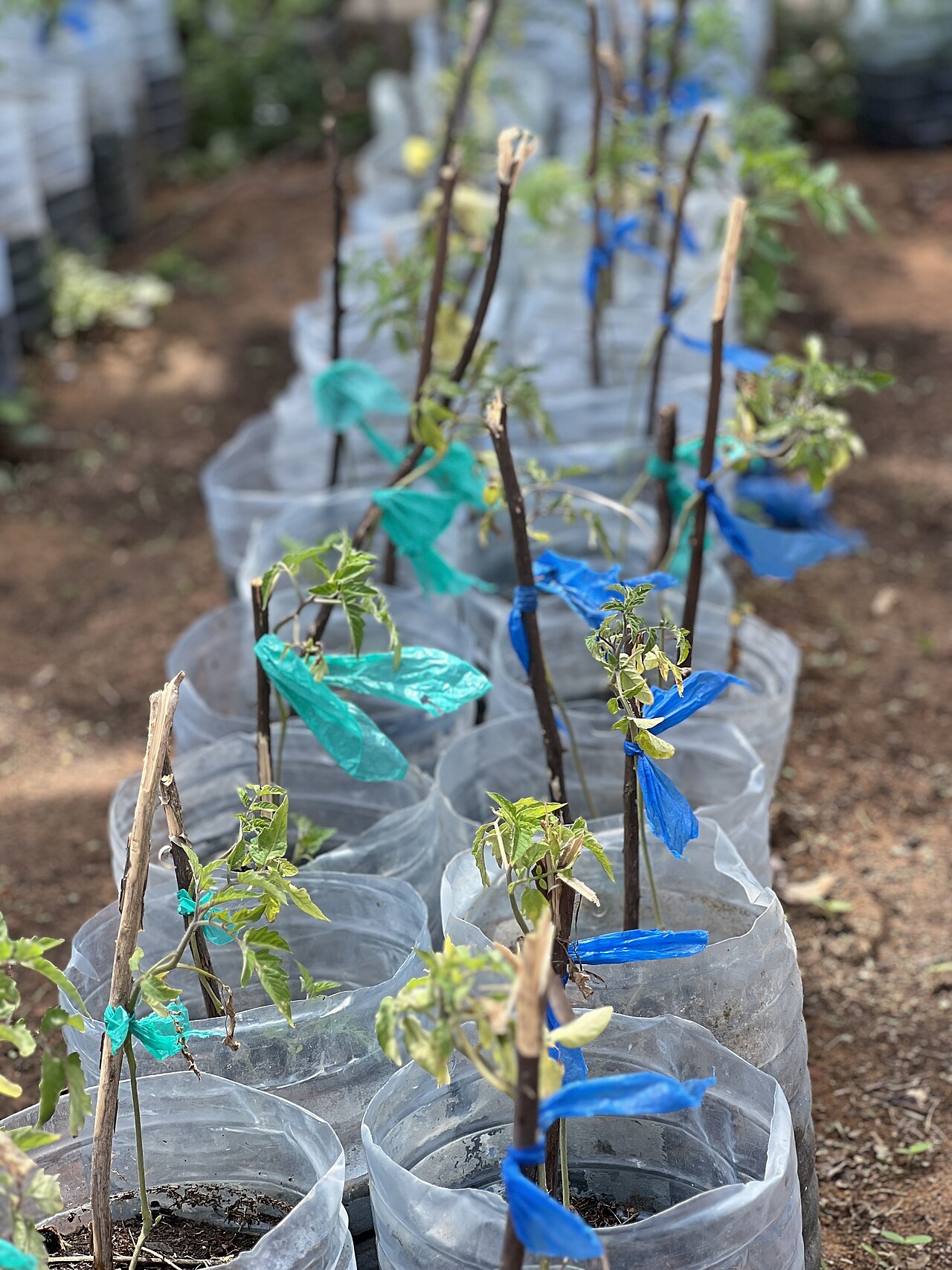
Transplant at the right time
Wait until nights stay above about 55°F (13°C) and the soil is warm. Harden off seedlings for a week first. Space plants 18 inches apart in full sun.
Water and feed
- Keep the soil evenly moist. Uneven watering is the main cause of blossom end rot.
- Mulch to keep moisture steady.
- Feed with a balanced fertilizer at planting, then switch to a lower-nitrogen feed once flowers appear. Too much nitrogen gives leaves but few peppers.
Support
Tall varieties and heavy-fruiting plants need stakes or cages. Tie branches loosely to avoid breaking them.
Common problems
- Blossom end rot: a dark, leathery spot at the base of the fruit, usually from uneven watering. Water consistently.
- Flowers drop without fruit: often caused by temperatures above about 90°F (32°C) or night temperatures below about 60°F (16°C).
- Aphids and pepper weevils: check leaves and buds weekly.
Harvest
Peppers can be picked green, but most varieties sweeten and change color if left on the plant. Cut the stem with clean pruners instead of pulling the fruit, which can damage branches.
Temperature controls fruit set
Peppers stop setting fruit when nights stay below about 60°F (16°C) or days climb above 85-90°F (29-32°C). Blossoms drop before forming fruit. In hot regions, afternoon shade cloth helps during July and August. Early transplanting into warm soil matters more than an early start indoors.
Transplant technique
Harden off for seven to ten days. Set plants out on a cloudy day or in the evening, and bury the stem about an inch deeper than it grew in the pot. Keep the root ball intact. Tall varieties need a stake at planting time, because driving one in later damages roots.
Feeding on a schedule
Wait until the first flowers open before adding nitrogen. A balanced fertilizer at planting, then a low-nitrogen side-dress when flowers appear, works well. Too much nitrogen gives a large bush with few peppers. Blossom-end rot is tied to calcium availability and uneven watering, not just a lack of calcium in the soil.
Keeping seed true
Peppers self-pollinate mostly, but insects move pollen between varieties. If you save seed, separate varieties by several hundred feet or stagger flowering. Hot peppers planted downwind reduce the chance of sweet peppers crossing.
Common questions
Why did all my flowers fall off?
Temperature stress is the usual cause. Cool nights or very hot days stop fruit set.
When should I pick peppers?
Green fruit is edible, but most varieties sweeten and change colour if left another week or two.