
Pick the right type
- June-bearing: one big harvest in early summer. Best for jam and freezing.
- Everbearing: two smaller harvests, usually late spring and late summer.
- Day-neutral: produces steadily through the season when temperatures are moderate. Good for containers.
Site and soil
Strawberries need full sun, at least 6-8 hours a day. The soil should drain well and have a slightly acidic pH, about 5.5-6.5. Work compost into the bed before planting.
Planting
- Plant bare-root or potted runners in spring after the last frost.
- Set the crown (where leaves meet roots) at soil level. Buried crowns rot; crowns set too high dry out.
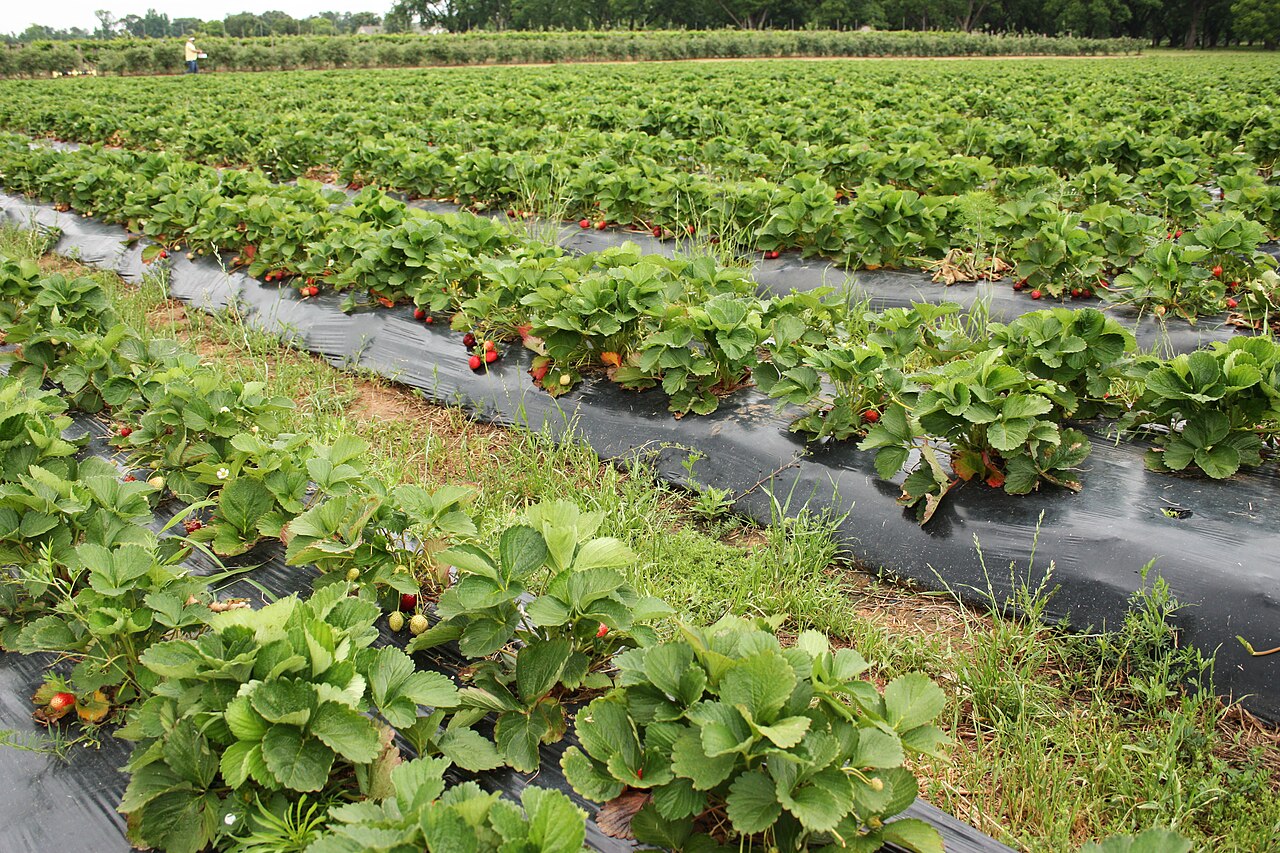
- Space plants 12-18 inches apart in rows, or 12 inches apart in matted beds.
Watering and mulch
Give about 1 inch of water per week, directed at the soil rather than the leaves. Mulch with straw under the fruit to keep berries clean and reduce rot.
Runners and renewal
Strawberries send out runners. Keep the best ones to fill gaps, and trim the rest so the plant puts energy into fruit. Replace beds every 3-4 years, because yields drop as plants age and disease builds up.
Common problems
- Birds and squirrels: use netting once berries start to color.
- Gray mold: improve airflow, avoid wet leaves, and pick ripe fruit promptly.
- Slugs: remove debris where they hide and use traps.
Winter care
In cold regions, cover plants with a light layer of straw after the ground freezes. Remove it in early spring so the plants do not stay smothered.
Match the type to your goal
June-bearing varieties give one large crop over two to three weeks, which suits jam and freezing. Everbearing types give two smaller flushes. Day-neutral varieties produce through the season where summers stay moderate. Containers work best with day-neutral or alpine strawberries.
Crown depth decides survival
The crown sits where leaves meet roots. Keep it level with the soil surface. Too deep and it rots; too high and the roots dry out. Set transplants 12-18 inches apart with the roots spread outward.
Runners and renewal
Strawberries produce daughters on long runners. Keep the strongest two or three per plant to fill the row and remove the rest. Beds usually decline after three or four years, so start a new bed in a different spot and rotate out old plants.
Winter and bird protection
In cold regions, cover plants with straw after the ground freezes, then pull it back in spring. Netting keeps birds off ripe fruit. Slugs hide under boards and dense mulch; remove those hiding places near the bed.
Common questions
Why are my berries small?
Crowded plants, old beds, and dry spells all reduce fruit size. Thin runners and water steadily.
Can strawberries grow in hanging baskets?
Yes. Use a hanging basket with drainage and a day-neutral variety. Water daily in summer.