
What mulch does
- Reduces evaporation, so you water less.
- Blocks light that weed seeds need to sprout.
- Moderates soil temperature.
- Breaks down over time and improves soil structure (organic mulches only).
Organic mulches
- Shredded leaves: free, nutrient-rich, great for beds and under shrubs.
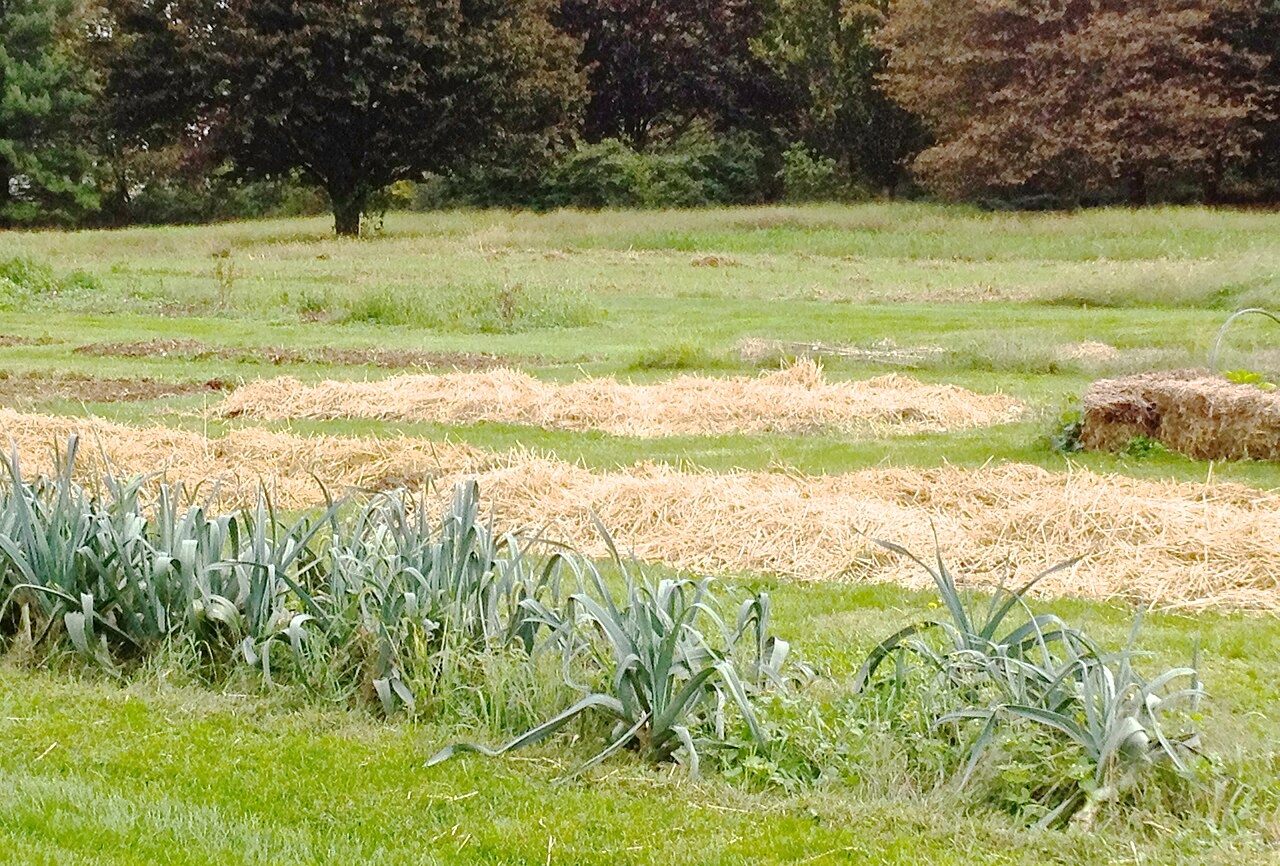
- Straw: excellent for vegetables and strawberries. Use weed-free straw.
- Wood chips: long-lasting, ideal for paths, trees, and perennial beds.
- Compost: a thin layer feeds the soil and suppresses weeds.
Inorganic mulches
Landscape fabric and plastic can suppress weeds but do not improve soil. Fabric can trap moisture and roots can grow into it. In vegetable beds, most gardeners prefer organic mulch.
How deep?
Two to 3 inches is the right depth for most beds. Thinner layers do not block weeds well. Thicker layers can keep the soil too wet and can prevent air from reaching roots.
Keep mulch away from stems
Leave a gap of a few inches around plant stems and tree trunks. Mulch piled against stems holds moisture on the bark, which invites rot and pests. This is sometimes called “volcano mulching” and it is a common and harmful mistake.
When to apply
- Spring: after the soil has warmed, so it does not keep the ground cold.
- Summer: mulch after watering so moisture stays in the soil.
- Fall: a layer over perennials and garlic protects roots during freezing weather.
Choose by what stays put
Shredded leaves mat down and suit vegetable beds. Straw is clean around strawberries and tomatoes but blows around on windy sites. Wood chips last longest around trees and perennials. Grass clippings work only in thin layers; a thick layer heats and smells.
Depth and the stem gap
Two to three inches is enough for most beds. Keep a 2-3 inch ring of bare soil around plant stems and tree trunks. Mulch pressed against bark holds moisture there and invites rot. For trees, spread mulch out to the drip line rather than piling it near the trunk.
When to apply
Wait until spring soil has warmed before mulching vegetables; an early layer keeps soil cold. Water first, then mulch so moisture is trapped in the soil. In fall, a layer over garlic and perennials reduces frost heaving.
Inorganic options
Landscape fabric blocks weeds but does not feed soil and can trap roots. Gravel suits paths and drought-tolerant plantings, not vegetable beds. Cardboard under wood chips is a useful way to convert lawn to a new bed.
Common questions
Does mulch attract slugs?
Dense, damp mulch can. Keep it away from seedlings and check under boards and pots.
Should I remove old mulch?
Only if it is compacted or diseased. Otherwise, top up rather than strip it off.