
Determinate vs. indeterminate
Determinate tomatoes grow to a fixed size and ripen in a burst — do not prune, or you lose yield. Indeterminate tomatoes grow all season and benefit from pruning and support.
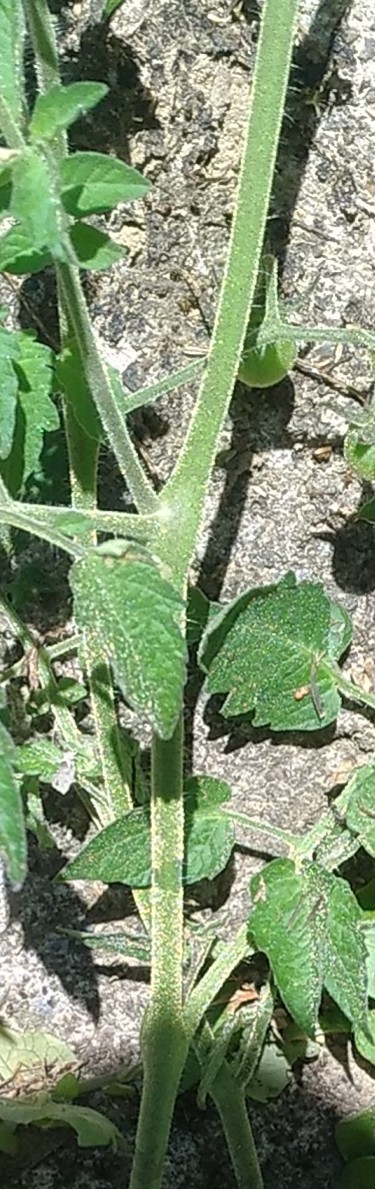
What to prune
- Suckers: shoots between the main stem and a branch. Remove small ones early by pinching; use clean shears for larger ones.
- Lower leaves: remove leaves touching soil to reduce splash-borne disease.
- Yellow/diseased leaves: remove promptly.
When to prune
Start once the plant is established (1-2 ft tall). Prune lightly and often rather than heavily at once. Stop heavy pruning 4-6 weeks before first frost to let fruit ripen.
Support matters
Stake or cage indeterminate plants. Pruned plants need support; unpruned bushy plants can sprawl but are harder to harvest and more disease-prone.
How much to remove
A common approach: keep 1-2 main stems and remove most suckers. In hot climates, leaving more foliage protects fruit from sunscald. Adjust to your conditions.
Common mistakes
- Pruning determinate varieties.
- Pruning wet plants (spreads disease).
- Over-pruning, causing sunscald and stress.
- Using dirty tools.
Read the plant before you cut
Determinate tomatoes set a fixed crop and finish in a short window. Remove only dead or diseased leaves from those plants. Indeterminate vines keep growing until frost and respond well to sucker removal. The sucker is the shoot that forms in the angle between the main stem and a leaf branch. It grows fast and will become another vine if left alone.
A workable rhythm
Once the first flower cluster opens, remove suckers below it. Check plants every five to seven days during peak growth. Pinch small suckers with your fingers; use clean snips for thicker ones. Leaves that touch soil should go, because soil splash carries blight spores onto foliage. Stop heavy pruning four to six weeks before your first expected frost so the remaining fruit can ripen.
Tools and sanitation
Use bypass pruners and wipe the blades with alcohol between plants when disease is present. Never prune wet foliage. Water at the base and mulch to reduce soil splash, which does more to prevent disease than any spray.
What people get wrong
Cutting off too much leaf area exposes fruit to sunscald. In hot regions, keep extra foliage over the fruit and remove only the lowest leaves. Pulling off large suckers by hand tears the stem; a clean cut heals faster.
Common questions
Should I prune determinate tomatoes?
Only to remove dead or diseased foliage. Heavy pruning removes fruit-producing branches and lowers yield.
What is topping?
Pinching the growing tip late in the season to stop new growth and push energy into ripening fruit.