
Stop watering on a schedule
A plant that needs water on Monday may not need it again until the next Sunday. Light, temperature, pot size, and humidity change how fast soil dries. Water when the plant needs it.
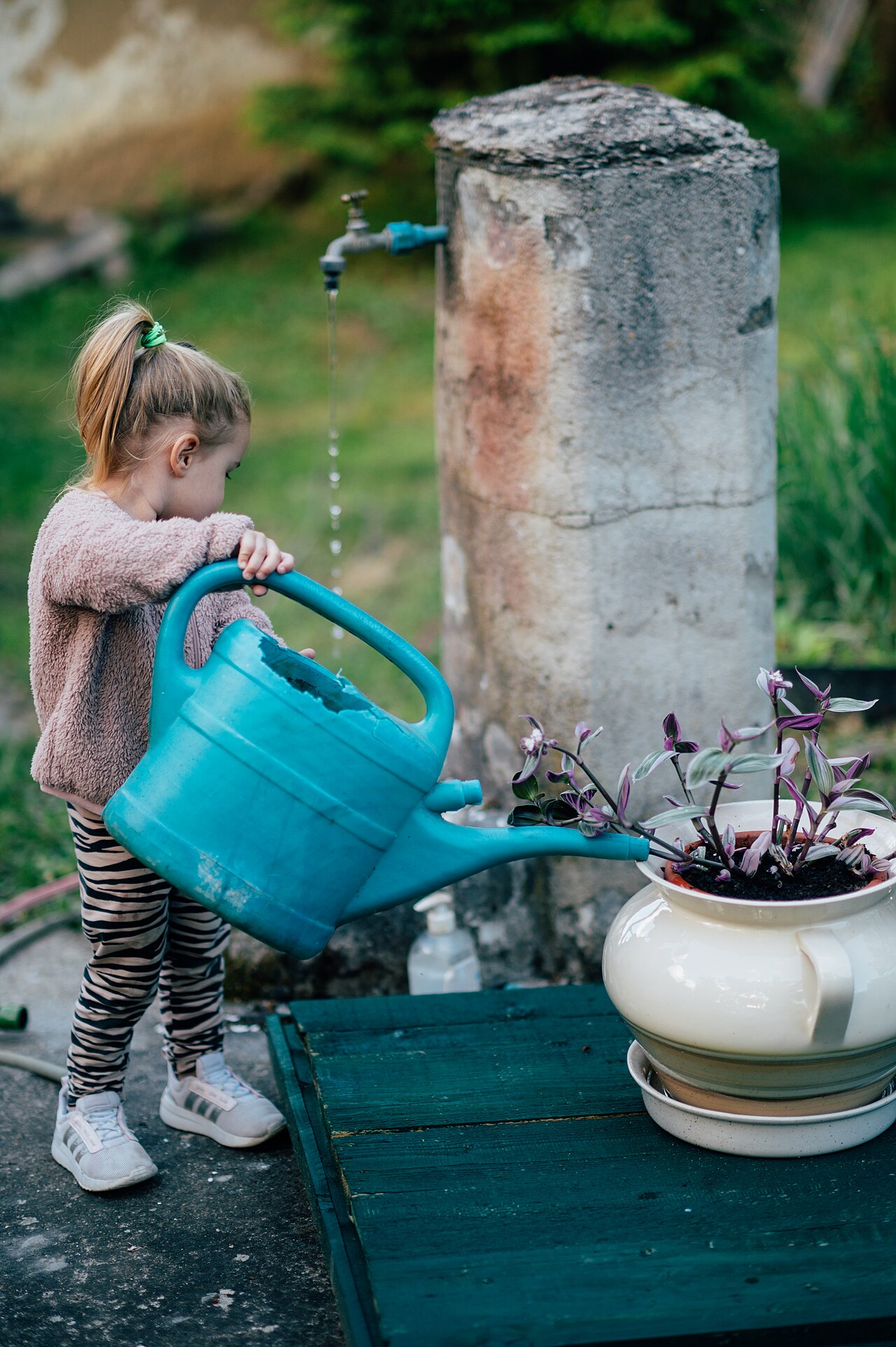
Check the soil first
- Finger test: push a finger 2 inches into the soil. Dry? Water. Damp? Wait.
- Weight test: lift the pot. A dry pot feels noticeably lighter.
- Moisture meter: a cheap probe helps beginners, but calibrate it against the finger test.
Water thoroughly
When you water, soak the whole root ball until water runs out of the drainage holes. Light sprinkles wet only the top inch and leave roots dry. Empty the saucer 15-30 minutes later so roots do not sit in water.
Match the pot and the plant
- Terracotta pots dry out fast and suit plants that like dry soil, such as succulents.
- Plastic and glazed pots hold moisture longer and suit thirsty plants like peace lilies.
- Always use a pot with a drainage hole.
Signs of overwatering vs. underwatering
- Overwatered: yellow lower leaves, soft or black stems, mushy roots, a sour smell, fungus gnats.
- Underwatered: crispy brown leaf edges, drooping that recovers after watering, dry soil pulling away from the pot.
Seasonal changes
Most plants need less water in winter when light is lower and growth slows. Watch for the first signs of rot, and cut back before you see them.
Common mistakes
- Watering on a fixed calendar.
- Letting pots sit in standing water.
- Using cold water straight from the tap on tropical plants (room temperature is better).
- Adding more water to a plant that is wilting from root rot.
Symptoms that look alike
Wilting can mean dry soil or soggy roots. Check the soil before you reach for the watering can. Overwatered plants often have yellow lower leaves, soft stems, a musty smell, and small flies near the soil. Underwatered plants have crisp brown edges and soil that has pulled away from the pot.
A weekly check, not a weekly watering
Light, temperature, humidity, pot material, and pot size all change how fast soil dries. Pick one day a week to feel the soil and lift the pot. Water only when the top inch or two is dry. A terracotta pot in a warm room may need water twice as often as a glazed pot in a cool one.
How much water is enough
Pour slowly until water leaves the drainage holes. That flushes salts and wets the whole root ball. Empty the saucer after 15-30 minutes. A little sip every day keeps the surface wet while the middle stays dry, which trains shallow roots and causes problems later.
Root rot recovery
If the stem is soft, remove the plant from the pot and inspect the roots. Healthy roots are firm and pale; rotted roots are brown and mushy. Trim the rot, repot in fresh fast-draining mix, and reduce light for a week while the plant recovers.
Common questions
Should I use ice cubes to water houseplants?
No. Cold water can shock tropical roots, and a melting cube rarely wets the whole root ball.
Is misting the same as watering?
No. Misting raises humidity briefly but does not water roots.