
Whiteflies are small, moth-like insects that cluster on the undersides of leaves. A combination of traps, biological controls, and good habits keeps them in check.
Identifying whiteflies
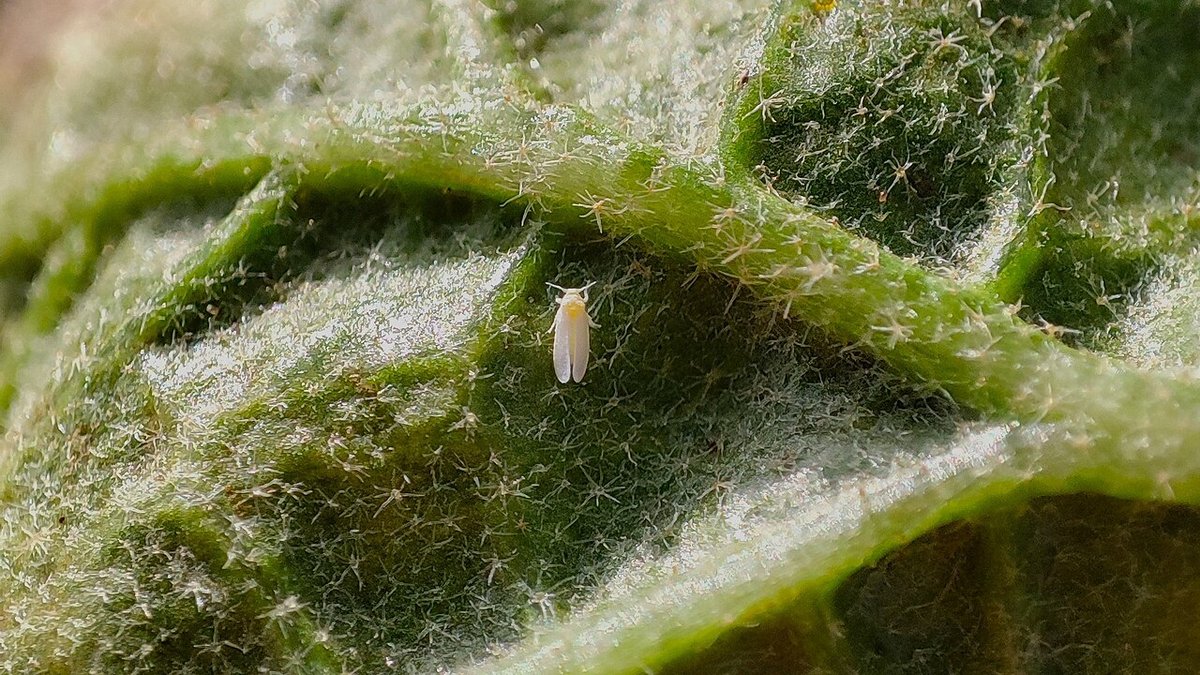
Adults are tiny, about 1 to 2 millimetres, and fly up in a cloud when the plant is disturbed. They are white and resemble small moths. Nymphs are flat, oval, and translucent, and they stay on the undersides of leaves.
Whiteflies feed on sap and excrete honeydew, which attracts ants and grows sooty mould. Heavy infestations cause yellowing, stunting, and leaf drop. They also transmit plant viruses.
Why they are difficult
Whiteflies reproduce quickly and are resistant to many insecticides. The waxy coating on adults protects them from sprays. Nymphs are hard to reach under leaves. They also have a wide host range, including tomatoes, peppers, brassicas, and many ornamentals.
Controlling them naturally requires persistence and a combination of methods rather than a single treatment.
Yellow sticky traps
Yellow sticky traps catch adult whiteflies and reduce the breeding population. Place them horizontally just above the plant canopy, where adults fly. Replace them when covered. Traps alone will not eliminate an infestation, but they monitor numbers and reduce pressure.
Biological controls
Encarsia formosa, a tiny parasitic wasp, is the most effective biological control. It lays eggs in whitefly nymphs, and the developing wasp kills the host. It works best in greenhouses and warm conditions. Release rates depend on the infestation level.
Predatory mites and lacewing larvae also feed on whitefly nymphs. They are less specific but useful in a mixed garden. Avoid broad-spectrum insecticides, which kill these beneficial insects.
Cultural controls
Remove heavily infested leaves and dispose of them in a sealed bag. Do not compost them. Keep the area around plants clean of weeds, which can host whiteflies. Reflective mulch, such as aluminium foil or white plastic, confuses adults and reduces landing.
Water plants well, since stressed plants are more susceptible. Avoid excess nitrogen, which produces soft growth that attracts whiteflies. Good airflow and spacing reduce humidity, which whiteflies prefer.
Sprays
Insecticidal soap and neem oil kill nymphs on contact. They do not affect adults or eggs, so repeat applications every 5 to 7 days are needed. Spray in the evening, covering the undersides of leaves thoroughly. Test a few leaves first to check for sensitivity.
A strong jet of water can dislodge nymphs from leaves. Repeat every few days. This is labour-intensive but effective for small infestations.
Prevention
Inspect new plants before bringing them home. Quarantine them for a week and watch for whiteflies. Remove plant debris promptly. In a greenhouse, use insect screens on vents to exclude adults.
Rotate crops in the vegetable garden, since whiteflies build up on the same host over time. A diverse planting with flowers that attract beneficial insects reduces pressure.
Field notes and finer details
Identifying whiteflies
Adults are tiny, white, and fly up in a cloud when the plant is disturbed. Nymphs are flat and oval on the undersides of leaves. They excrete honeydew and spread disease.
Controls
Yellow sticky traps reduce adults. Encarsia formosa, a parasitic wasp, is the most effective biological control. Insecticidal soap and neem oil kill nymphs on contact.
Prevention
Inspect new plants before bringing them home. Remove infested leaves. Keep the area clean of weeds. Rotate crops in the vegetable garden.
Sprays
Insecticidal soap and neem oil kill nymphs on contact. They do not affect adults or eggs, so repeat applications every 5 to 7 days are needed. Spray in the evening, covering the undersides of leaves thoroughly. Test a few leaves first.
Prevention
Inspect new plants before bringing them home. Quarantine them for a week. Remove plant debris promptly. In a greenhouse, use insect screens on vents. Rotate crops in the vegetable garden.
Other controls
A strong jet of water can dislodge nymphs from leaves. Repeat every few days. This is labour-intensive but effective for small infestations. Reflective mulch confuses adults and reduces landing.
Biological controls
Encarsia formosa, a parasitic wasp, is the most effective biological control. It lays eggs in whitefly nymphs. It works best in greenhouses and warm conditions. Predatory mites and lacewing larvae also feed on nymphs.
Cultural controls
Remove heavily infested leaves and dispose of them in a sealed bag. Keep the area clean of weeds. Reflective mulch confuses adults and reduces landing. Water plants well, since stressed plants are more susceptible.
Sprays
Insecticidal soap and neem oil kill nymphs on contact. They do not affect adults or eggs, so repeat applications every 5 to 7 days are needed. Spray in the evening, covering the undersides of leaves thoroughly.
A strong jet of water can dislodge nymphs from leaves. Repeat every few days. This is labour-intensive but effective for small infestations.
Identification
Adults are tiny, about 1 to 2 millimetres, and fly up in a cloud when the plant is disturbed. They are white and resemble small moths. Nymphs are flat, oval, and translucent on the undersides of leaves.
Whiteflies feed on sap and excrete honeydew, which attracts ants and grows sooty mould. Heavy infestations cause yellowing, stunting, and leaf drop. They also transmit plant viruses.
Sprays
Insecticidal soap and neem oil kill nymphs on contact. They do not affect adults or eggs, so repeat applications every 5 to 7 days are needed. Spray in the evening, covering the undersides of leaves thoroughly. Test a few leaves first.
A strong jet of water can dislodge nymphs from leaves. Repeat every few days. This is labour-intensive but effective for small infestations.
Prevention
Inspect new plants before bringing them home. Quarantine them for a week and watch for whiteflies. Remove plant debris promptly. In a greenhouse, use insect screens on vents to exclude adults.
Rotate crops in the vegetable garden, since whiteflies build up on the same host over time. A diverse planting with flowers that attract beneficial insects reduces pressure.
Common questions
Are whiteflies harmful to plants?
Yes, they suck sap, weaken plants, and spread viruses.
What is the best natural control?
Encarsia formosa wasps plus sticky traps.
Can I use insecticidal soap?
Yes, it kills nymphs on contact. Repeat every 5 to 7 days.