
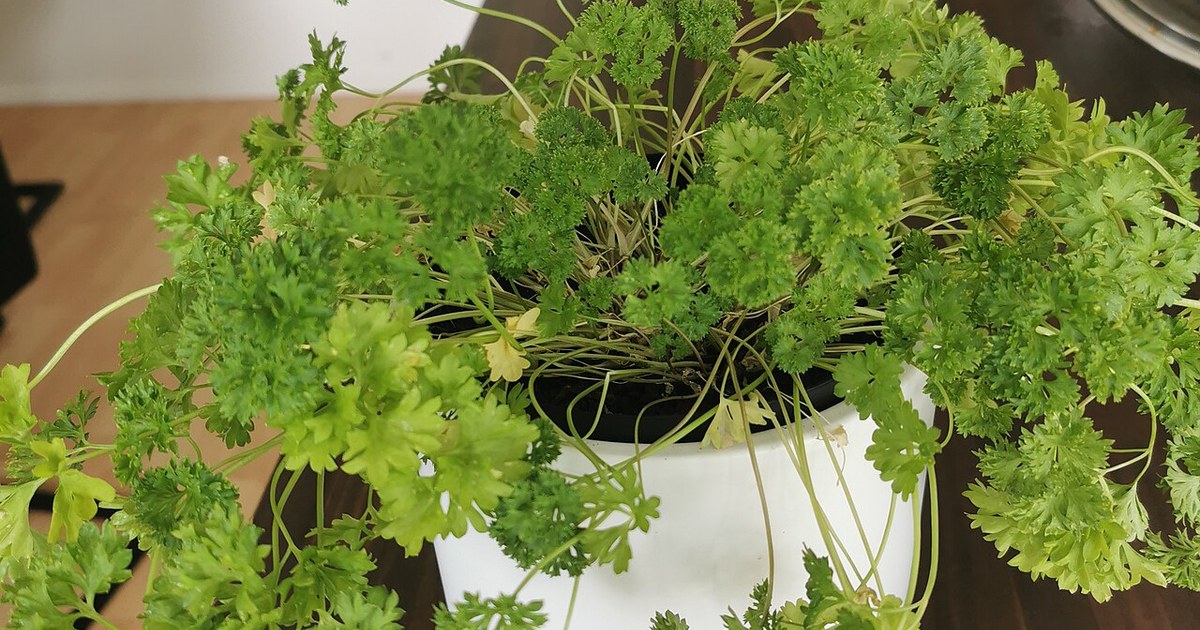
Parsley is a biennial herb often grown as an annual. Indoors, with bright light and consistent care, it can produce leaves for many months.
Light and temperature
Parsley needs bright light and a suitable temperature for healthy growth. A sunny windowsill or grow light keeps the plant compact and productive. Good air circulation reduces disease.
Soil and watering
Use a standard potting mix with good drainage. Water when the top inch of soil feels dry, and water thoroughly until it drains. Empty the saucer after watering. Avoid waterlogging, which causes root rot.
Harvesting
Begin harvesting when the plant is well established. Cut outer leaves or sprigs with scissors, leaving the centre to grow. Take no more than a third at a time. Regular harvesting keeps the plant productive.
Common problems
Aphids and spider mites can appear in dry conditions. Rinse the plant with water or use insecticidal soap. Powdery mildew appears in humid, still air; improve airflow. Yellow leaves usually mean overwatering.
Field notes and finer details
Light and temperature
Parsley needs at least 4 to 6 hours of bright light. A south or east window is ideal. It tolerates cooler temperatures, around 60 to 70°F. Good air circulation reduces disease.
Sowing and harvest
Sow seed directly; parsley does not transplant well. Germination is slow, taking 2 to 4 weeks. Soak seeds overnight to speed germination. Thin seedlings to 3 to 4 inches apart. Cut outer stems at the base.
Propagation
Parsley is grown from seed. It does not root well from cuttings. Let a plant flower and set seed if you want to collect seed.
Light and temperature
Parsley needs at least 4 to 6 hours of bright light. A south or east window is ideal. It tolerates cooler temperatures, around 60 to 70°F (15-21°C). Good air circulation reduces disease.
Soil and watering
Use a standard potting mix with good drainage. Parsley has a taproot and appreciates a pot 8 to 10 inches deep. Water when the top inch is dry. Keep the soil evenly moist.
Sowing and harvest
Sow seed directly; parsley does not transplant well. Germination is slow and erratic, taking 2 to 4 weeks. Soak seeds overnight to speed germination. Thin seedlings to 3 to 4 inches apart. Begin harvesting when the plant has several leaves. Cut outer stems at the base.
Common problems
Aphids cluster on new growth. Rinse them off. Parsley is susceptible to fungal diseases in humid conditions. Good airflow helps. Yellow leaves can mean overwatering or a nutrient shortage.
Propagation
Parsley is grown from seed. It does not root well from cuttings. Let a plant flower and set seed if you want to collect seed for future sowing.
Light and temperature
Parsley needs at least 4 to 6 hours of bright light. A south or east window is ideal. It tolerates cooler temperatures, around 60 to 70°F (15-21°C). Good air circulation reduces disease.
Soil and watering
Use a standard potting mix with good drainage. Parsley has a taproot and appreciates a pot 8 to 10 inches deep. Water when the top inch is dry. Keep the soil evenly moist.
Sowing and harvest
Sow seed directly; parsley does not transplant well. Germination is slow and erratic, taking 2 to 4 weeks. Soak seeds overnight to speed germination. Thin seedlings to 3 to 4 inches apart. Begin harvesting when the plant has several leaves. Cut outer stems at the base.
Common problems
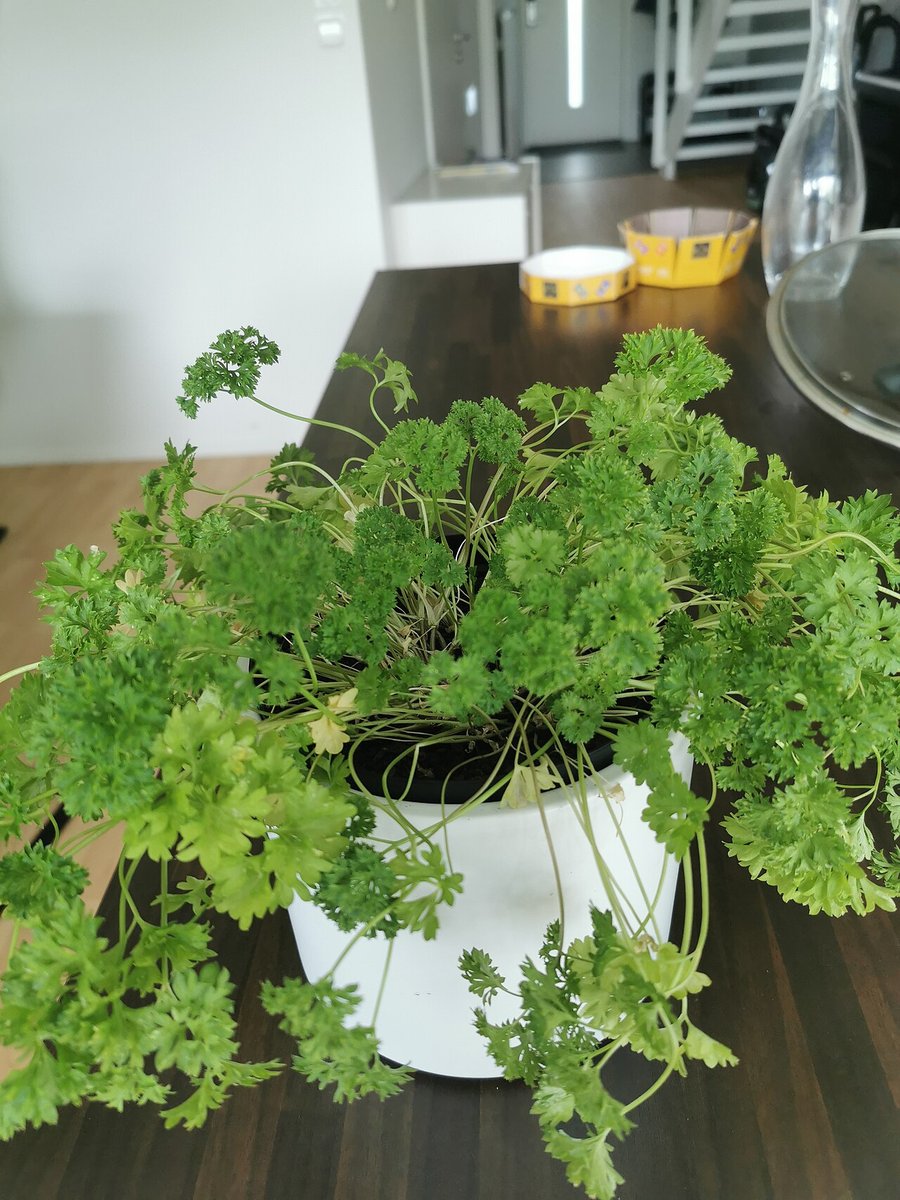
Aphids cluster on new growth. Rinse them off. Parsley is susceptible to fungal diseases in humid conditions. Good airflow helps. Yellow leaves can mean overwatering or a nutrient shortage.
Propagation
Parsley is grown from seed. It does not root well from cuttings. Let a plant flower and set seed if you want to collect seed for future sowing.
Light and temperature
Parsley needs at least 4 to 6 hours of bright light. A south or east window is ideal. It tolerates cooler temperatures, around 60 to 70°F (15-21°C). Good air circulation reduces disease.
Soil and watering
Use a standard potting mix with good drainage. Parsley has a taproot and appreciates a pot 8 to 10 inches deep. Water when the top inch is dry. Keep the soil evenly moist.
Common problems
Aphids cluster on new growth. Rinse them off. Parsley is susceptible to fungal diseases in humid conditions. Good airflow helps. Yellow leaves can mean overwatering or a nutrient shortage.
Light and temperature
Parsley needs at least 4 to 6 hours of bright light. A south or east window is ideal. It tolerates cooler temperatures, around 60 to 70°F (15-21°C). Good air circulation reduces disease.
Soil and watering
Use a standard potting mix with good drainage. Parsley has a taproot and appreciates a pot 8 to 10 inches deep. Water when the top inch is dry. Keep the soil evenly moist.
Sowing and harvest
Sow seed directly; parsley does not transplant well. Germination is slow and erratic, taking 2 to 4 weeks. Soak seeds overnight to speed germination. Thin seedlings to 3 to 4 inches apart. Begin harvesting when the plant has several leaves. Cut outer stems at the base.
Propagation
Parsley is grown from seed. It does not root well from cuttings. Let a plant flower and set seed if you want to collect seed for future sowing.
Common questions
Can parsley grow in low light?
It tolerates less light than most herbs.
Why is my parsley slow to germinate?
Parsley germination is naturally slow. Soak seeds overnight to speed it up.
How often should I water parsley?
When the top inch of soil is dry.