
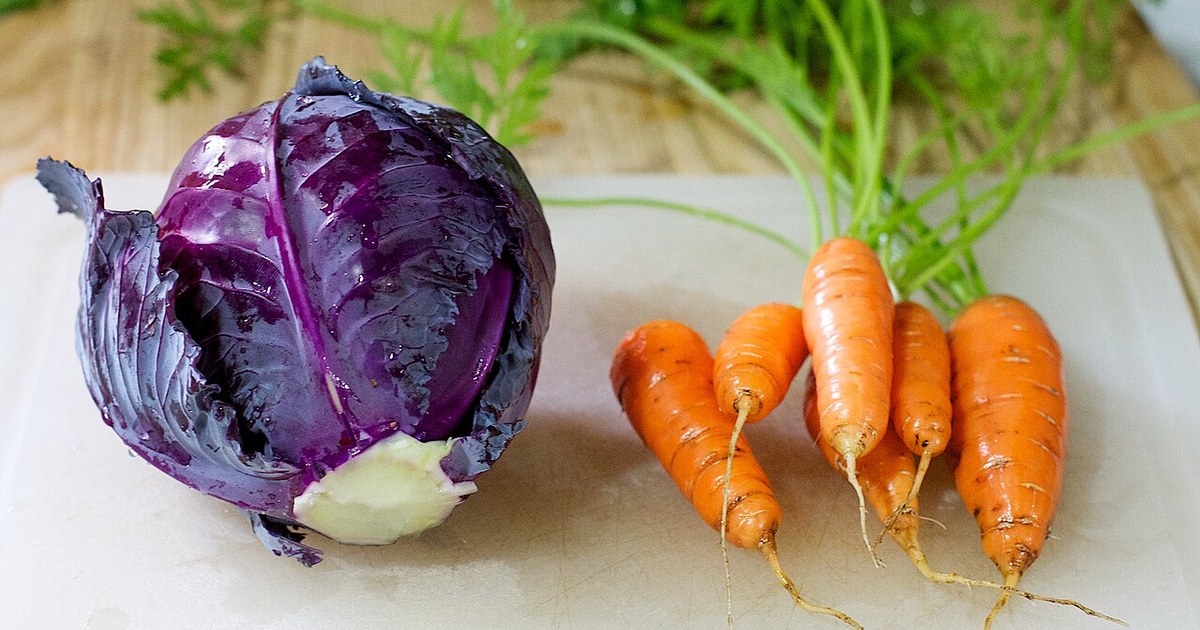
Carrots need loose, stone-free soil more than they need fertilizer. Sow directly, keep the surface from crusting, and thin the row so roots have room to swell.
Prepare loose soil
Carrots need soil that is deep, loose, and free of stones. Dig or loosen the bed to at least 10-12 inches. Heavy clay or rocky soil causes short, forked, or misshapen roots. In those cases, grow in a raised bed or a deep container filled with light potting mix.
When and how to sow
- Sow directly in the garden 2-3 weeks before the last spring frost, and again every 3 weeks for a steady supply.
- Carrot seed is tiny. Sow thinly, about 1/4 inch deep, and cover lightly.
- Keep the surface moist until seedlings appear, which can take 10-14 days. A board laid over the row helps hold moisture.
Thinning
When seedlings reach about 2 inches tall, thin them to 2-3 inches apart. Crowded carrots stay small. Snip the extra seedlings at soil level instead of pulling them, so you do not disturb the roots you are keeping.
Watering and feeding
Water evenly, about 1 inch per week. Irregular watering causes cracking. Avoid heavy nitrogen feeding, which gives lots of leaves and small roots. Compost worked in before planting is usually enough.
Pests and weeds
- Carrot rust fly: cover the bed with fine mesh or floating row cover.
- Weeds: keep the bed weeded while seedlings are young, since carrots are slow to establish.
Harvest
Most varieties mature in 60-80 days. Loosen the soil with a fork before pulling. Carrots can stay in the ground for weeks in cool weather, but they become woody once they start to split or grow too large.
Field notes and finer details
Soil temperature and emergence
Carrot seed germinates slowly. Soil at 45°F (7°C) is the lower limit; 55-65°F (13-18°C) is better. Emergence takes 10-21 days. Mix the tiny seed with fine sand so it distributes evenly. A thin layer of vermiculite over the row prevents crusting that traps seedlings.
Why carrots fork
Forking follows a blocked root tip: stones, hardpan, fresh manure, or transplanting. Direct sow into soil loosened at least 10 inches deep. Remove rocks and break clods before planting. Heavy clay gardens should choose short or finger varieties rather than long storage types.
Container depth by variety
Baby carrots need 6-8 inches of loose mix. Standard varieties need 12 inches or more. A shallow bowl will grow carrots, but they will be stubby. Keep containers watered evenly; a dry spell followed by heavy rain splits roots.
Storage without a root cellar
Cut tops to about half an inch, brush off soil, and bag loosely in the refrigerator. They keep for weeks. Where winters are mild, leave roots in the ground under a thick layer of shredded leaves and harvest through early spring.
Soil preparation comes first
Carrots need loose, stone-free soil to form straight roots. Dig the bed at least 10 to 12 inches deep and break up clods. Remove stones, sticks, and hard lumps by hand. On heavy clay, add compost and coarse sand to improve structure, or grow in a raised bed filled with a light mix. A raised bed is the simplest fix where the native soil is compacted.
Avoid fresh manure and heavy applications of nitrogen. Rich soil with too much nitrogen produces leafy tops and forked roots. A soil test that shows adequate phosphorus and potassium means you need little fertilizer for this crop.
Sowing directly
Carrots do not transplant well; disturbing the taproot causes forking. Sow seed outdoors when the soil can be worked and has warmed to about 50°F (10°C). Sow a quarter to a half inch deep in rows 12 inches apart. Mix fine seed with a little sand so you can space it evenly.
Germination takes one to three weeks, and the surface must not crust over. Cover the row with a thin layer of vermiculite, fine compost, or burlap that you remove once seedlings appear. Keep the seedbed moist with a gentle spray until the seedlings are established. A row that dries once during germination will produce gaps.
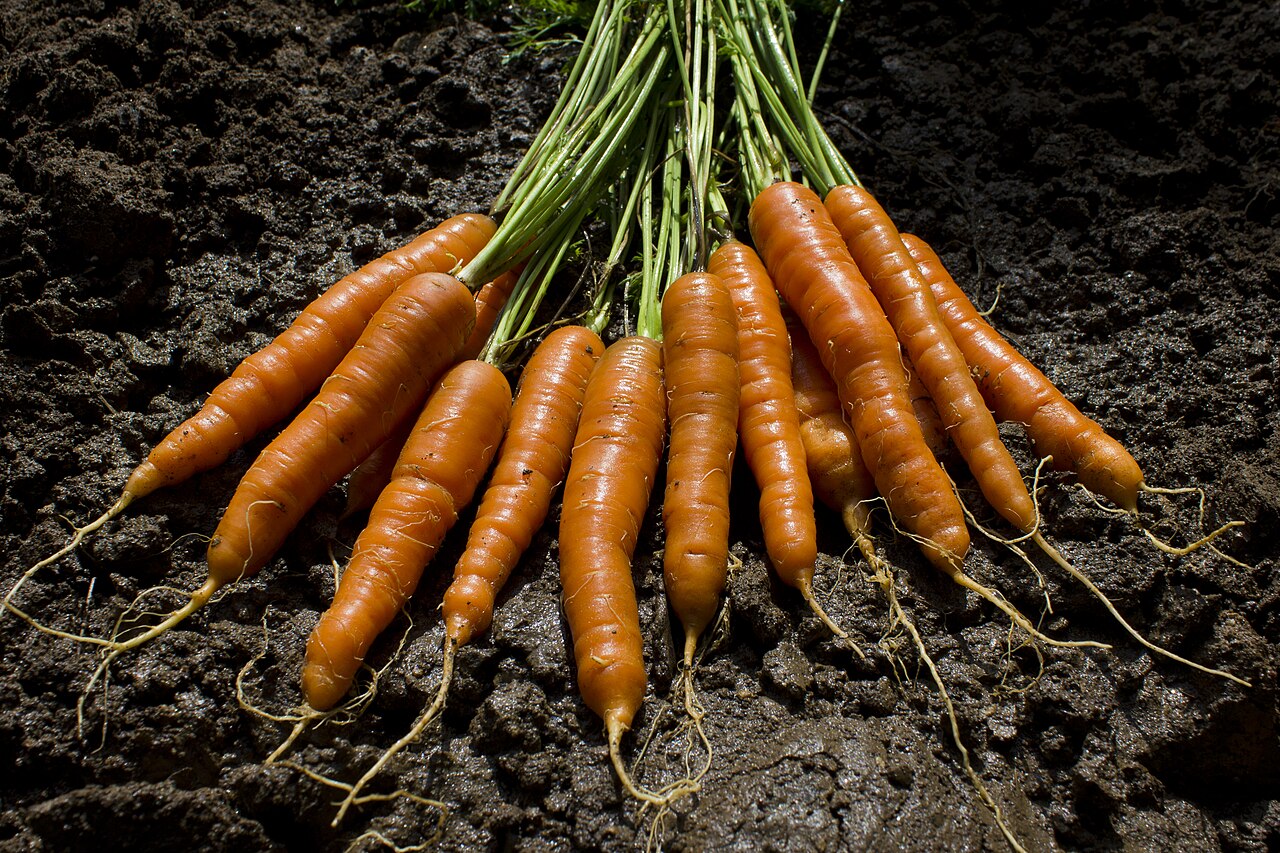
Thinning and watering
Thin seedlings when they are two inches tall. Crowded carrots cannot swell, so thinning is essential even though it feels wasteful. Snip unwanted seedlings at soil level rather than pulling, which can disturb the roots you want to keep. Aim for plants two to three inches apart for main-crop varieties.
Water about an inch a week, more in sandy soil or hot weather. Keep the moisture even; a dry spell followed by heavy rain splits roots. Mulch lightly between rows once the plants are established to hold moisture and reduce weeds. Weed carefully near the row, since carrot seedlings are easy to confuse with weeds.
Varieties and harvesting
Choose a type that suits the soil. Short, round varieties handle shallow or heavy soil better than long Imperator types. Purple, yellow, and white carrots offer different colours but the same growing needs. Note the days to maturity on the packet; main-crop types store better than early ones.
Pull when the roots reach the size you want; they do not improve by staying in the ground indefinitely. Loosen the soil with a fork before pulling to avoid snapping the root. In regions with mild winters, carrots can stay in the bed with a thick mulch and be harvested through winter. Otherwise lift them in autumn, remove the tops, and store in cool, humid conditions.
Growing carrots in containers
A pot at least 10 inches deep gives most carrot varieties room to develop. Use a light potting mix with no lumps, stones, or clods, and avoid adding fresh compost with large pieces. Short round varieties suit containers better than long types. Water consistently, since a pot dries faster than a bed.
Sow thicker than you would outdoors and thin to about two inches apart. A window box that receives six hours of sun can produce a useful crop in spring and autumn. In hot regions, keep the container in morning sun only.
Preventing forks and poor shape
Forked roots usually mean the taproot was damaged. Causes include stones in the soil, compacted ground, transplanting, excess nitrogen, and soil that was not dug deeply enough. There is no way to straighten a forked carrot once it has formed, so prevention is the only option.
Round shoulders and green tops appear when the crown is exposed above the soil. Cover the tops with soil or mulch. Cracked roots follow a period of drought and then heavy rain; keep watering even. If the bed is heavy clay, grow short varieties or use a raised bed.
Storing the harvest
Remove the tops before storage, leaving about half an inch of leaf stalk. Leaving the tops on draws moisture out of the root. Brush off soil rather than washing it, since damp carrots store poorly. Pack them in slightly damp sand in a box in a cool place, or keep them in the refrigerator in a perforated bag.
Check stored roots monthly and remove any that have become soft. Main-crop varieties store for months under cool, humid conditions; early varieties are better eaten fresh.
Common questions
Can I grow carrots indoors?
Only with a strong light and a deep container. A sunny windowsill usually produces thin tops and poor roots.
Should I thin carrots?
Yes. Crowded roots stay small. Snip extras at soil level so you do not disturb neighboring seedlings.