
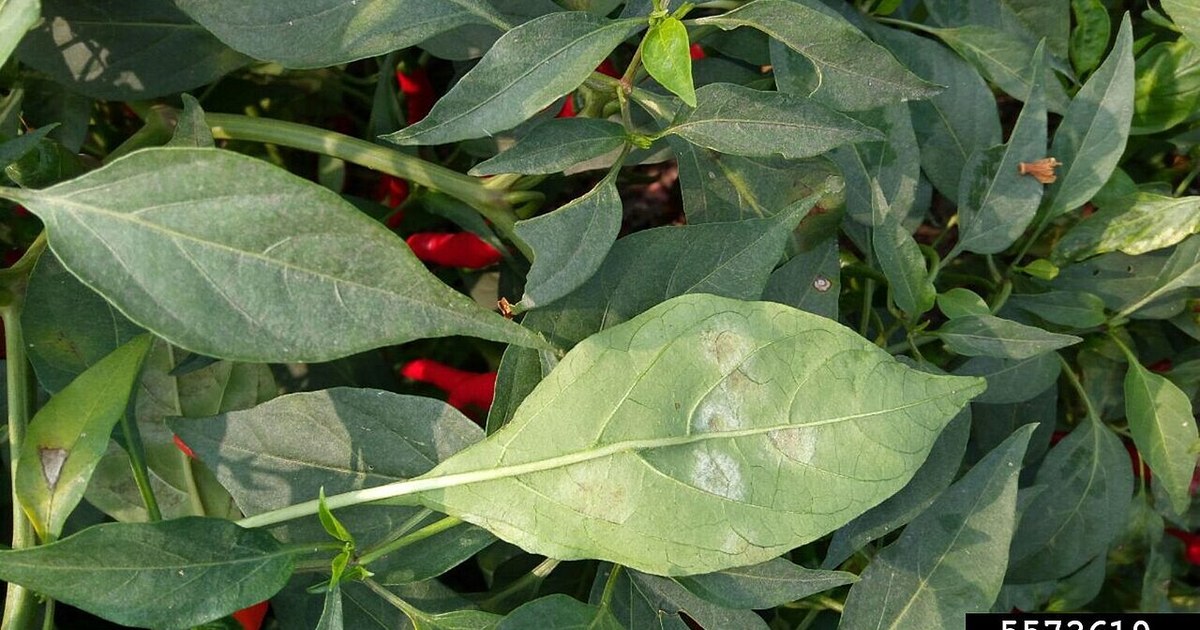
Powdery mildew appears on warm days and cool nights, even without rain. Resistant varieties, spacing, and water at soil level do more than spraying after spots appear.
What it looks like
Powdery mildew appears as white or gray powdery spots on the upper surfaces of leaves, and sometimes on stems and fruit. It spreads quickly on squash, cucumbers, zucchini, peas, roses, and phlox.
Conditions it likes
The fungus thrives in dry leaves with high humidity around them, moderate temperatures, and poor airflow. Many spores spread without rain, so it can appear even when the soil is dry.
Prevention
- Choose resistant varieties. Seed catalogs often note mildew resistance.
- Space plants well. Good airflow dries leaves faster.
- Water at the base. Wet foliage encourages the fungus. Water in the morning so leaves dry during the day.
- Remove infected leaves early, and bag them rather than composting them.
- Clean up at the end of the season to remove fungus that overwinters on debris.
Early treatment
At the first sign of spots, remove the worst leaves and spray the rest with a mixture of 1 tablespoon baking soda, 1/2 teaspoon liquid soap, and 1 gallon of water. Test on a few leaves first, since some plants are sensitive. Potassium bicarbonate and sulfur products are also used in organic gardening, but always follow the label.
When to act
Check plants weekly once warm, humid weather starts. Early treatment works best. Once most leaves are covered, the plant is unlikely to recover fully, but removing leaves and improving airflow still helps.
Common mistakes
- Overhead watering in the evening, which leaves leaves wet overnight.
- Planting too densely.
- Spraying during hot afternoons, which can burn leaves.
Field notes and finer details
Conditions that favour it
Powdery mildew thrives when leaves are dry but humidity is high, with warm days and cool nights. Unlike many fungi, it does not need rain. Dense plantings and poor airflow make it worse.
Resistance and spacing
Seed packets often note mildew resistance. Resistant varieties are the cheapest control. Space plants according to the packet and prune crowded growth so air moves through the canopy. Water at soil level in the morning.
Early treatment
At the first spots, remove the worst leaves and bag them. A spray of 1 tablespoon baking soda and half a teaspoon of liquid soap in a gallon of water can slow spread. Test a few leaves first and spray in cool hours.
Sanitation at season end
Remove infected debris in fall. The fungus overwinters on plant remains. Rotate susceptible crops out of the same bed where practical.
How to recognise it early
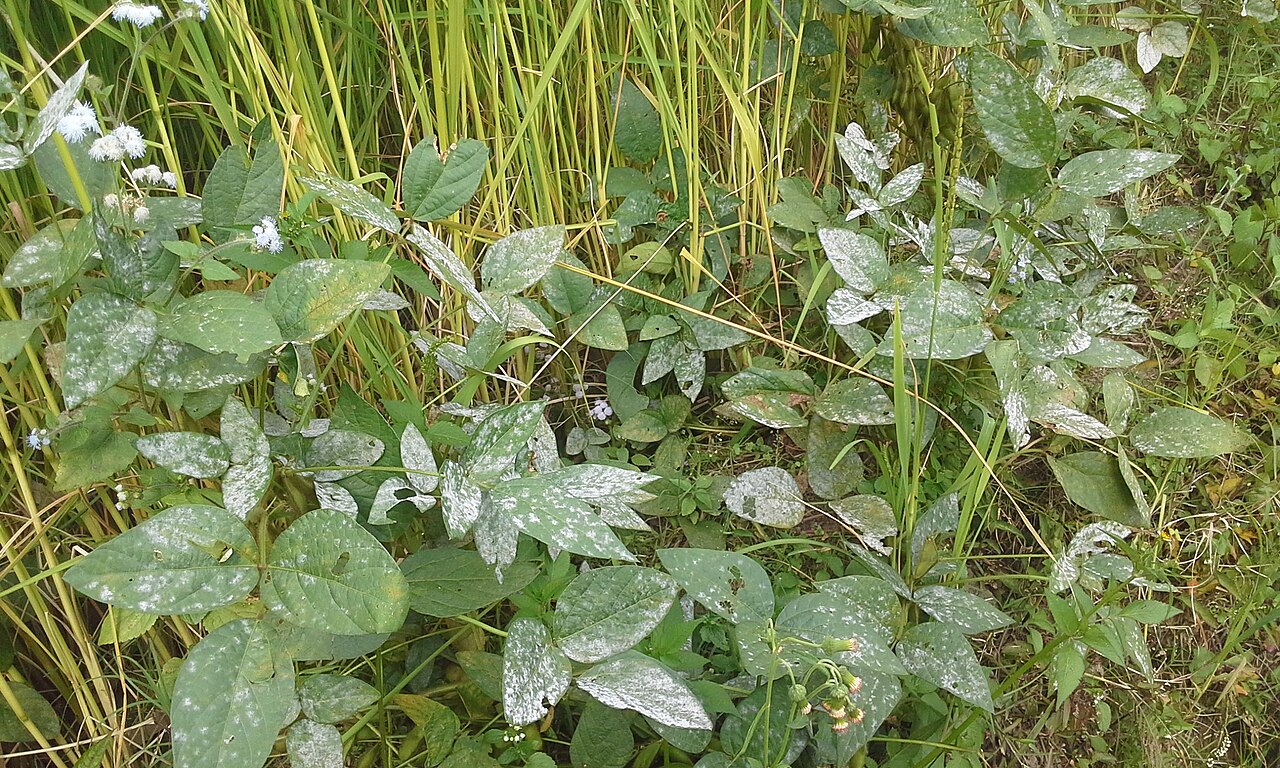
Powdery mildew starts as small white or grey spots that look like dust on leaves. Unlike many fungal diseases, it does not need a wet leaf to infect. It spreads when days are warm, nights are cool, and humidity is high. Check the undersides of leaves and the lower canopy first, where air moves least.
Do not confuse it with downy mildew, which produces yellow patches on the upper surface and a fuzzy growth underneath. Powdery mildew can be wiped off with a finger, though that does not cure the plant. Early spotting matters because once a large share of the leaf area is covered, spraying will not restore it.
The conditions to change
Space plants according to the seed packet. Crowded leaves hold humid air against each other and give the fungus a place to establish. Water at soil level in the morning so foliage dries quickly, and avoid overhead irrigation in the evening. Prune crowded growth from established plants to open the canopy.
Air movement is often the missing piece in a greenhouse or a sheltered courtyard. Open vents, run a small fan, or move pots apart. In a garden bed, remove weeds around the crop that restrict airflow at ground level.
Resistant varieties and planting layout
Seed packets and plant labels often note mildew resistance. For squash, cucumbers, and roses, choosing a resistant variety is more effective than any spray. Rotate susceptible crops out of the same bed where practical, since the fungus survives on plant debris. Clean up infected foliage at the end of the season rather than leaving it on the bed.
Treatment options that hold up
At the first spots, remove the worst leaves and bag them. A spray of one tablespoon of baking soda and half a teaspoon of liquid soap in a gallon of water can slow spread. Test a few leaves first and spray during cool hours. Commercial fungicides labelled for powdery mildew work too, but follow the interval on the label and rotate products if repeated applications are needed.
Sprays protect new growth; they do not repair leaves that are already covered. If a plant is more than half covered, remove it and plan a resistant replacement for the next season.
Building a routine for the season
Inspect susceptible crops once a week from the moment they are planted. Look at the lower leaves first and check both surfaces. A problem found on three leaves is manageable; a problem found after the canopy is covered is not. Keep a note of which varieties stayed clean so you can order them again next year.
At the end of the season, collect infected leaves and plant debris and dispose of them away from the garden. The fungus overwinters on plant residues and on the stems of susceptible perennials. A compost pile that does not get hot may not kill the spores, so bag material from a badly infected crop.
Greenhouses and sheltered spaces
Under glass, humidity and still air make mildew easier to establish. Open vents early in the day, space pots so leaves do not touch, and water the floor or the soil rather than the foliage. A small fan moving air through the plants reduces the risk significantly.
In a sheltered courtyard with little wind, the same rules apply on a smaller scale. Keep climbing plants thinned, and avoid packing pots so tightly that leaves trap moisture. Morning sunlight helps dry foliage faster than a shaded position.
Remember that spraying is only one part of the plan. Resistant varieties, spacing, airflow, and clean-up do more to prevent the disease than any product applied after spots appear. A treatment schedule without those changes will need repeating every season.
Common questions
Is powdery mildew harmful to eat?
It is not usually harmful on fruit, but badly infected plants produce less and leaves die early.
Will spraying cure a severe infection?
No. Once most leaves are covered, remove the plant and focus on preventing it next season.