
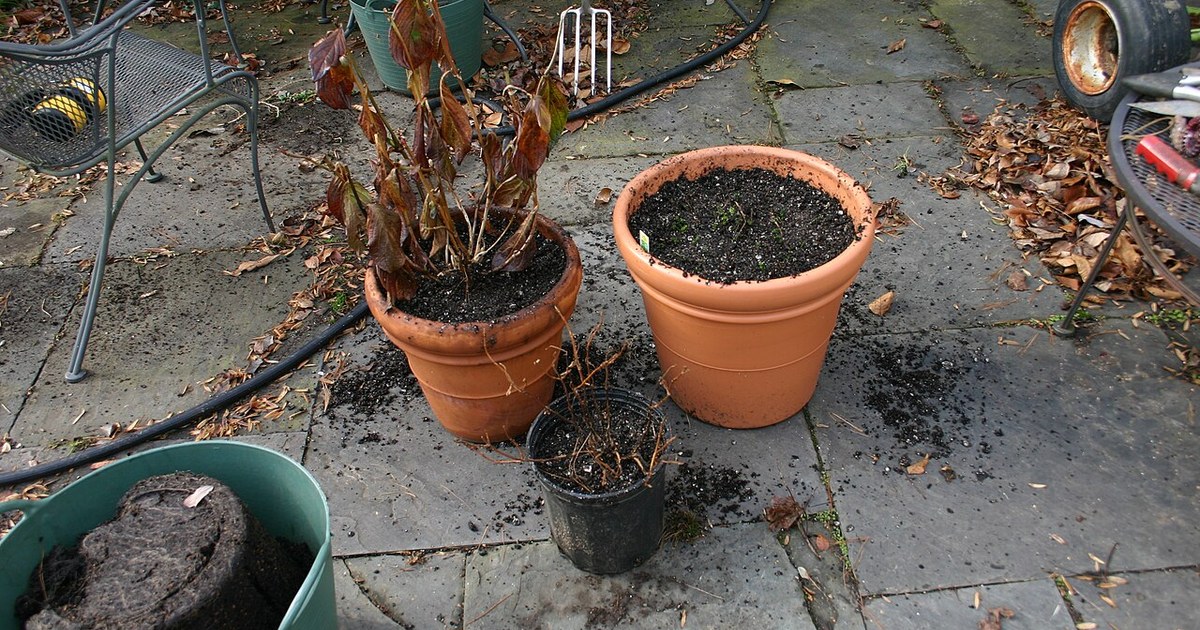
A plant tells you when it needs a bigger pot: roots circle the inside, soil dries quickly, or the pot tips over. Move up one size and give the roots room to grow into fresh mix.
Know when to repot
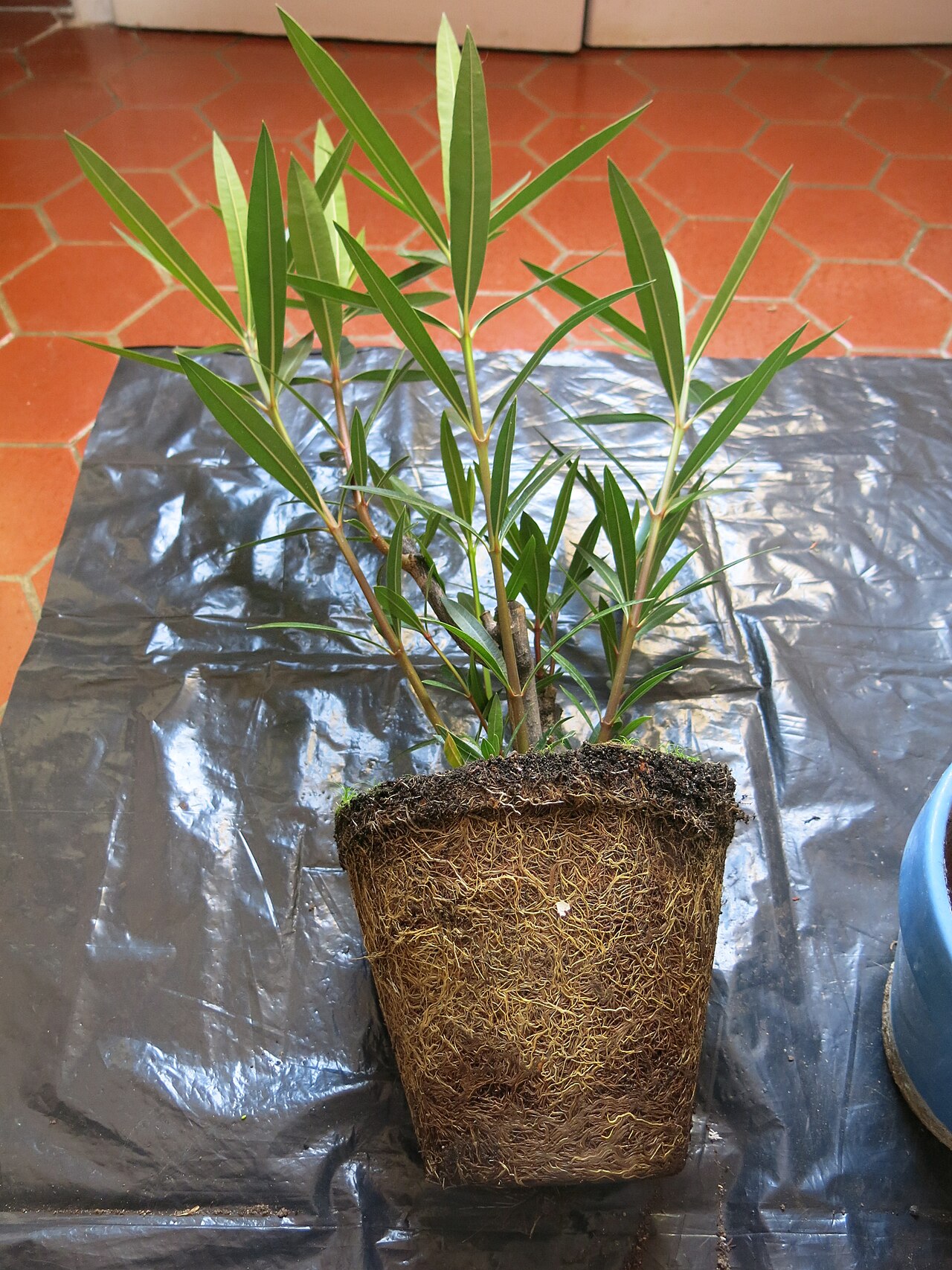
- Roots grow out of the drainage holes or circle the inside of the pot.
- Water runs straight through without soaking in, or the soil dries out within a day.
- Growth has slowed in spring and summer, the main growing season.
- The plant tips over easily because the root ball is too small for the pot.
Choose the right pot
Move up only 1-2 inches in diameter. A pot that is too large holds water around roots that cannot use it, which leads to rot. Always choose a pot with a drainage hole.
Step by step
- Water the plant a day before repotting so the root ball slides out more easily.
- Place a layer of fresh potting mix in the new pot.
- Tip the old pot on its side and ease the plant out. Tap the sides if it sticks.
- Gently loosen the outer roots with your fingers. Trim dead or mushy roots with clean scissors.
- Set the plant in the new pot at the same depth it was growing before. Fill around it with mix and press lightly.
- Water thoroughly until water drains from the bottom.
Aftercare
Keep the plant out of direct sun for a few days to reduce stress. Hold off on fertilizer for about 4-6 weeks, since fresh potting mix already contains nutrients. Expect a short pause in growth; this is normal.
Common mistakes
- Repotting too often. Most houseplants need it only every 1-3 years.
- Burying the stem deeper than before, which can cause rot.
- Using garden soil, which compacts in containers.
Field notes and finer details
Signs that are easy to miss
Roots circling the inside of the pot are a clear signal. So is soil that dries within a day of watering. A plant that tips over easily has a root ball too small for its pot. Repot in spring or early summer when growth is active.
Pot size and drainage
Move up one to two inches in diameter. A larger pot stays wet around roots that cannot use the water. Check that the new pot has a hole. If your decorative pot has none, keep the plant in a nursery pot and set it inside.
The repotting sequence
Water the day before so the root ball slides out. Loosen the outer roots with your fingers and trim any dark, mushy sections. Set the plant at the same depth it was growing. Fill around it, press lightly, then water until it drains.
Recovery
Keep the plant out of direct sun for a few days. Skip fertilizer for four to six weeks because fresh mix already contains nutrients. A short pause in growth is normal.
Signs that a pot is too small
Roots circling the inside of the pot, soil that dries within a day of watering, and a plant that tips over easily all point to a root-bound plant. Roots growing out of the drainage hole are a clear signal. A plant that has stopped producing new leaves during its growing season may also need more room, though check light and watering first.
Do not repot on a calendar. A slowly growing plant in a dim room may stay in the same pot for three years. A fast-growing vine may need a new home every spring. Check the root ball once a year by sliding the plant out of its pot.
Choosing the next pot
Move up one size, about 1 to 2 inches wider in diameter. A pot that is too large holds soil that stays wet around roots that cannot reach it, which leads to rot. The new container must have drainage holes. A decorative outer pot is fine as a cover, but take the plant out to water and let it drain before replacing it.
Terracotta suits plants that like to dry between waterings. Glazed ceramic or plastic holds moisture longer and suits ferns and calatheas. If the old pot is the same size but root-bound, wash it and reuse it after trimming the roots rather than buying a larger one.
The repotting process
Water the plant a day before so the roots are flexible. Slide it out by supporting the stem and tapping the pot. Loosen circling roots with your fingers and cut away any that are black, soft, or mushy with clean scissors. Put fresh potting mix in the bottom of the new pot, set the plant at the same depth it was growing, and fill around the root ball. Firm gently, leaving space at the rim for water.
Use a mix suited to the plant. Standard potting mix suits most houseplants. Add extra perlite for succulents and plants that dislike wet feet. Orchid bark is needed for orchids; ordinary soil will suffocate their roots.
Aftercare
Water thoroughly once after repotting, then let the pot drain. Keep the plant out of strong direct sun for a week while roots settle into the new mix. Some leaf drop is normal. Do not fertilize for four to six weeks; fresh potting mix already contains nutrients, and the roots are busy establishing.
If the plant was root-bound and badly overgrown, trim the top growth by a quarter to balance the reduced root system. Resume normal feeding in spring once new growth appears.
Handling difficult plants
A root-bound plant may have circled the pot so tightly that it will not slide out. Run a knife around the inside edge, then tap the pot firmly on its side. If it still will not budge, break a plastic pot away rather than pulling the plant by the stem. A plant with a thick woody stem can be lifted by the root ball with both hands.
Cacti and some succulents have fine spines; wrap the plant in a folded newspaper to hold it without being pricked. Use tongs to place it in the new pot. Do not water for several days after repotting a cactus, since cut roots are prone to rot.
When not to repot
A plant that is flowering is better left alone. Repotting during bloom can cause the flowers to drop. Wait until flowering finishes. The same applies in winter for most houseplants: growth is slow and roots recover slowly, so spring is the safer window.
A new plant bought from a shop usually does not need repotting for several months. The nursery potting mix is designed to hold water in their conditions. Moving it immediately adds another stress on top of the change of environment. Let it settle and check the moisture first.
Aftercare checklist
Keep the newly repotted plant in bright indirect light for a week. Water thoroughly once, then wait until the top inch is dry before watering again. Do not fertilize for a month. Remove any leaves that yellow during the first two weeks, and check for pests that may have been hiding in the old root ball.
If the plant droops despite moist soil, it may be in a pot that is too large or a mix that holds too much water. Check the soil at the bottom of the pot before adding more water. A small amount of leaf drop is normal, but continued decline means the roots were damaged during the move.
Common questions
How often should I repot?
Most houseplants need it every one to three years. Fast growers may need it annually.
Can I repot in winter?
It is possible, but recovery is slower. Spring and early summer are better.