
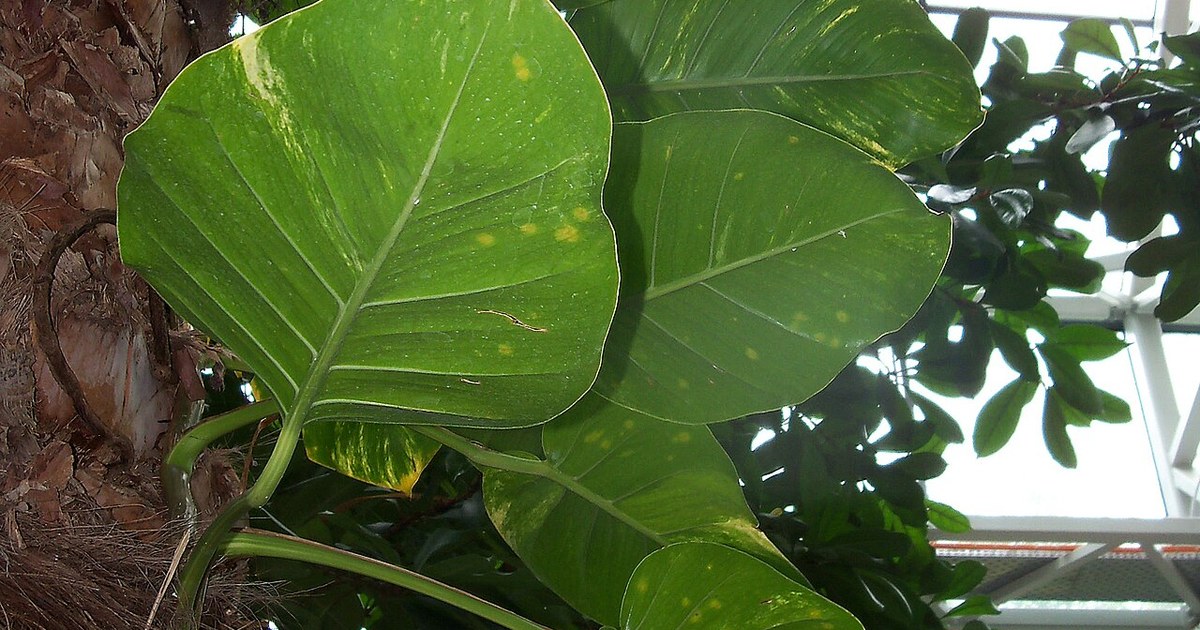
Pothos roots easily in water as long as the cutting includes a node. Change the water weekly, wait for roots an inch long, then move the cutting into potting mix.
Take the right cutting
Cut just below a leaf node, the small bump on the stem where a leaf attaches and where roots form. A cutting with 2-3 nodes and a few healthy leaves roots best. Remove the lowest leaf so it does not sit in the water.
Set up the jar
- Use a clear glass or jar so you can see roots forming.
- Place the cutting so the nodes are submerged but leaves stay above the water.
- Choose a spot with bright, indirect light. Direct sun can overheat the water.
Keep the water fresh
Change the water every 5-7 days, or whenever it looks cloudy. Rinse the jar at the same time. Room-temperature water is best.
How long it takes
Roots usually appear within 1-3 weeks. Wait until they are 1-2 inches long before potting, since short roots struggle in soil.
Moving to soil
- Fill a small pot with standard indoor potting mix.
- Make a hole and set the rooted cutting in it, covering the roots.
- Water lightly and keep the soil barely moist for the first two weeks.
Water roots can adapt to soil, but they may wilt briefly during the move. Keep the plant out of harsh sun until it perks up.
Common mistakes
- Cutting above the node. Without a node, there is no root.
- Leaving leaves in the water, which causes rot.
- Potting too early, before roots are strong.
Field notes and finer details
The node is the whole story
Roots form only at a node, the bump where a leaf joins the stem. A cutting with no node will sit in water indefinitely. Cut just below a node and keep two or three nodes under water, with leaves above the surface.
Water care
Use room-temperature water and change it every five to seven days. Cloudy water means bacteria are building. A clear jar lets you see roots, but keep it out of direct sun so the water does not warm up.
Moving to soil
Wait until roots are 1-2 inches long. Shorter roots dry out before they establish. Plant in standard potting mix, water lightly, and keep the soil barely moist for two weeks. Some wilting during the transition is normal.
Variegation note
Variegated pothos from a cutting keeps its pattern, but a cutting taken from a mostly green section may revert. Choose a stem with strong variegation if that is what you want.
Taking a cutting that will root
Roots form at a node, the slightly raised point where a leaf meets the stem. A section of stem with no node will not root. Choose a healthy vine and cut just below a node with clean scissors. The cutting should have two or three nodes and at least one leaf above the water line. Remove any leaf that would sit underwater and rot.
A cutting from the tip roots quickly but may be soft. A section from the middle of the vine has more stored energy and often catches up. If the plant is variegated, pick a section with clear variegation; a cutting from a mostly green section may grow back green.
Water, light, and the rooting jar
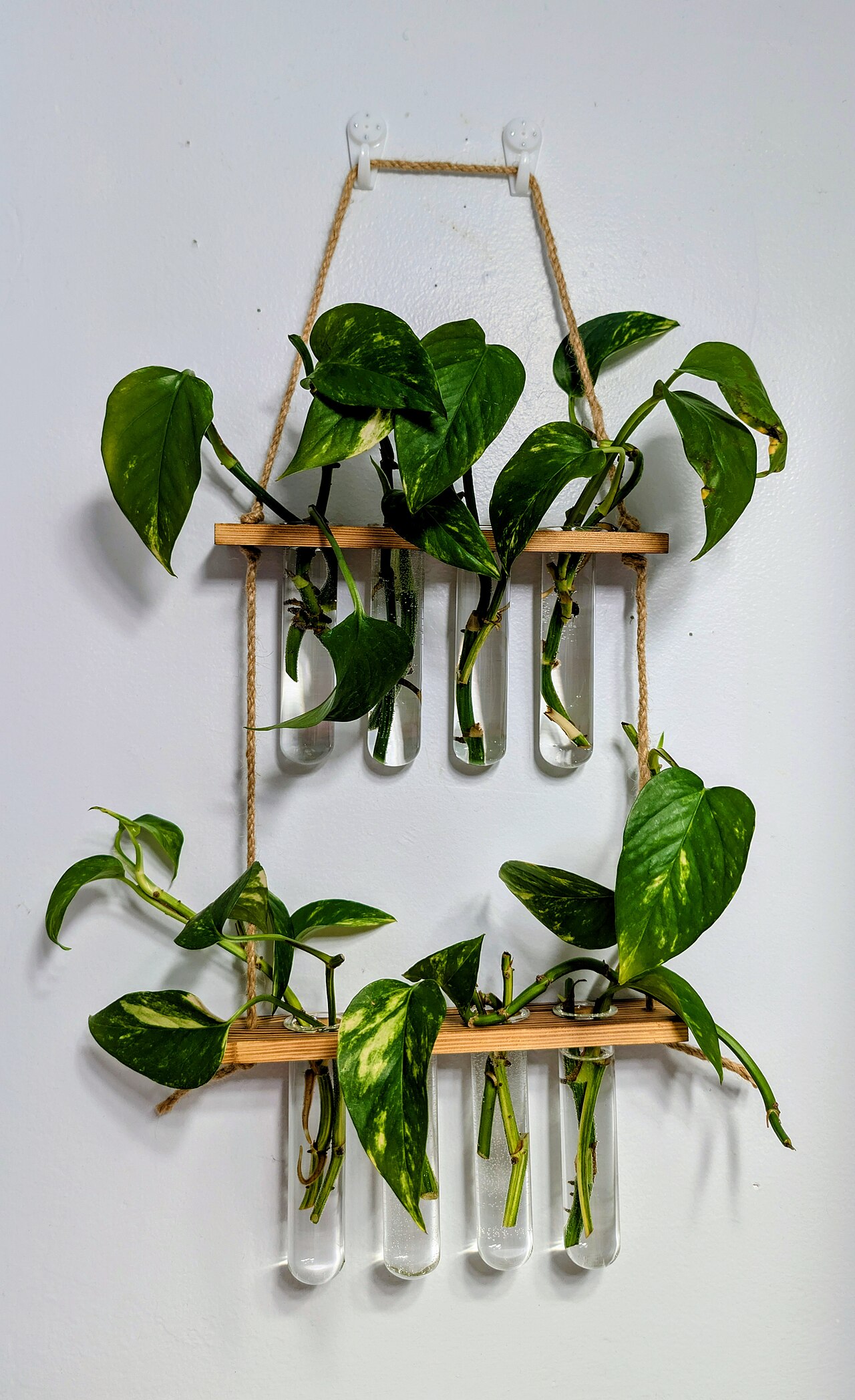
Use room-temperature water and a clean jar. Change the water every five to seven days, or sooner if it turns cloudy. A clear jar lets you watch root growth, but keep it out of direct sun, which warms the water and encourages bacteria. You do not need rooting hormone for pothos.
Roots usually appear in one to three weeks. Wait until they are 1 to 2 inches long before planting. Shorter roots dry out before they can take up water in soil. If a cutting turns black at the cut end, remove the soft portion, take a fresh cutting, and use a clean jar.
Transition to soil without losing the plant
Plant the rooted cutting in standard potting mix with a drainage hole. Keep the soil lightly moist but not saturated for the first two weeks. A clear plastic bag over the pot raises humidity while roots establish, but remove it for a few hours each day once new growth appears.
Some leaf drop is normal during the move from water to soil. The plant is replacing water roots with soil roots. Do not fertilize until you see new growth, usually three to four weeks. Keep the pot in bright indirect light and out of cold drafts.
From one cutting to a fuller pot
Three or four rooted cuttings planted together in one pot give a fuller result than a single vine. Plant them around the edge so the stems can trail. Rotate the pot monthly. If the plant stops producing new leaves, check whether the roots have filled the pot and move up one size in spring.
Keeping the parent plant healthy
Taking cuttings does not have to damage the original plant. Use clean scissors and take no more than a quarter of the vine at once. A plant that has been heavily cut back will take months to recover its foliage. Cut just above a node on the parent; that node will usually produce a new branch.
If the parent is variegated, choose cuttings with a balance of green and pale tissue. A section with mostly white tissue has little chlorophyll and may struggle to root. Keep the original plant in bright indirect light while it recovers, and resume normal feeding once new growth appears.
Common problems with water propagation
A cutting that turns black at the base has rotted. The cause is usually stagnant water, a leaf submerged below the water line, or a jar that was not clean. Start again with a fresh cut and clean water. A cutting that stays green but produces no roots for a month is often too cold; move the jar to a warmer room.
Roots that form and then turn brown usually mean the water was not changed often enough. Do not add fertilizer to the rooting jar; there is no need for nutrients before roots exist. Once planted in soil, the cutting will draw what it needs from the potting mix.
Planting several cuttings together
A fuller hanging basket starts with three or four rooted cuttings planted around the rim. Use a standard potting mix with extra perlite for drainage. Water lightly after planting and keep the soil just moist for the first two weeks. Rotate the basket every week so all sides fill in evenly.
Pothos is tolerant of neglect but grows fastest with consistent care. Water when the top inch of soil is dry, feed monthly in spring and summer at half strength, and wipe dust from the leaves occasionally. Trim long vines to keep the shape you want, and root the trimmings to start again.
Common questions
Can I propagate pothos directly in soil?
Yes, but water rooting lets you check progress. Rooting hormone is not needed.
Why is my cutting turning black?
The cut end rotted. Remove the soft portion, take a fresh cutting below a node, and use clean water.