
A tomato plant in a large pot can produce as well as one in the ground. The keys are a big enough container, a suitable variety, and steady watering.
Choose a variety that suits a pot
Not every tomato belongs in a container. Indeterminate varieties such as ‘Sungold’ and ‘Cherokee Purple’ keep growing until frost and need a large pot and a tall support. Determinate varieties such as ‘Roma’ and ‘Celebrity’ stop growing at a fixed height and are easier to manage. Dwarf and patio types such as ‘Tiny Tim’ and ‘Patio Choice’ are bred specifically for containers and need the least space.
Cherry tomatoes are the most forgiving for beginners because they set fruit readily and tolerate irregular care better than large-fruited types. If you want slicing tomatoes, pick a determinate variety and give it the largest pot you can manage.
Pot size and material
A single tomato plant needs at least 5 gallons of soil; 7 to 10 gallons is better. A pot smaller than that dries out within hours in summer and cannot hold enough nutrients for a full crop. Depth matters as much as width: aim for 12 to 18 inches so roots can develop.
Plastic and fabric pots are lighter and easier to move. Terracotta looks better but dries faster and is heavy once filled. Dark pots absorb heat, which can stress roots on a hot patio; wrap them in a light-coloured cover or place them where they get afternoon shade. Every pot must have drainage holes.
Soil and planting
Use a quality potting mix, not garden soil. Garden soil compacts in a container and drains poorly. Add about 20 percent compost and a handful of slow-release fertilizer to the mix before planting. A little perlite improves drainage if the mix feels heavy.
Set the plant deeper than it grew in its pot, burying the stem up to the first set of leaves. Tomatoes root along the buried stem, which strengthens the plant. Remove the lower leaves before planting. Water thoroughly after planting and mulch the surface with an inch of straw or shredded leaves.
Support from the start
Install a cage, stake, or trellis at planting time. Adding support later damages roots. A sturdy cage 4 to 5 feet tall suits determinate plants. Indeterminate plants need a taller stake or a string trellis. Tie the main stem loosely with soft garden tape every 8 to 10 inches as it grows.
Watering and feeding
Container tomatoes need more water than those in the ground. In hot weather a large plant in a 5-gallon pot may need water every day. Check the top inch of soil each morning; if it is dry, water until it runs from the drainage hole. Water at the base to keep foliage dry and reduce disease.
Feed every two weeks with a balanced liquid fertilizer once the first fruit sets. Too much nitrogen before flowering produces leaves instead of fruit. Switch to a lower-nitrogen feed once the plant is carrying a crop. If leaves yellow from the bottom up, the plant may need more nitrogen or more consistent watering.
Sun, temperature, and placement
Tomatoes need at least 6 to 8 hours of direct sun. A south-facing patio is ideal. In very hot regions, afternoon shade prevents blossom drop and sunscald on fruit. Keep pots off hot paving where possible, or raise them on feet so air circulates underneath.
Plant outside only after the last frost and when night temperatures stay above about 50°F (10°C). Cold nights slow growth and can cause flowers to drop even after the plant looks healthy.
Common problems in pots
Blossom end rot shows as a dark leathery patch on the bottom of the fruit. It is caused by irregular watering and low calcium uptake, not a lack of calcium in the soil. Keep moisture even and avoid letting the pot dry completely between waterings.
Cracked fruit usually follows a dry spell and then heavy watering. Consistent moisture prevents it. Yellow lower leaves in midsummer can be normal ageing; remove them to improve airflow. Aphids and whiteflies cluster on new growth; rinse them off with water or use insecticidal soap in the evening.
Harvesting
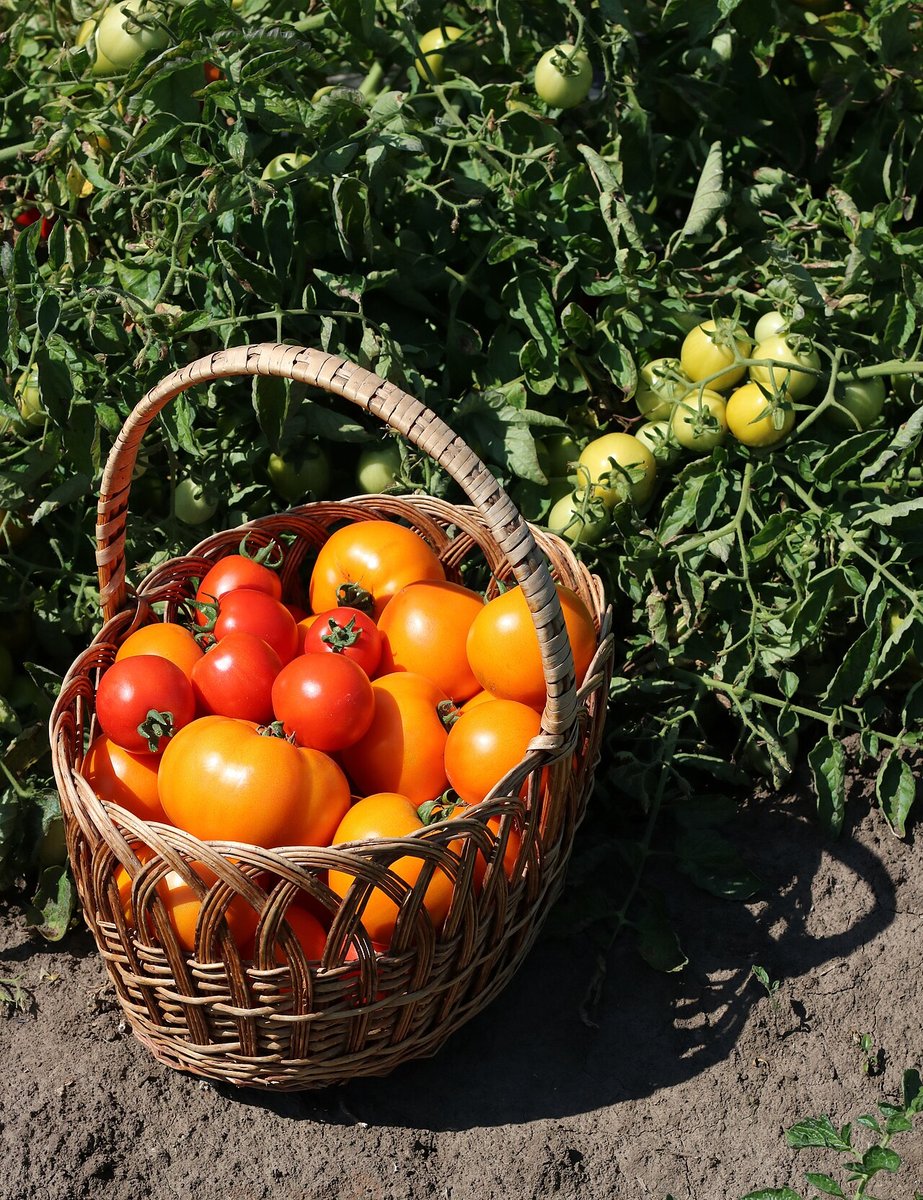
Pick fruit when it is fully coloured and slightly soft to the touch. Leaving fruit on the plant too long slows new production. In a cool autumn, pick green fruit before the first frost and ripen it indoors in a paper bag with a banana or apple. Remove the plant at the end of the season and discard the old soil rather than reusing it for tomatoes.
Field notes and finer details
Choosing varieties for containers
Determinate varieties stop growing at a fixed height and are easier to manage in pots. Indeterminate varieties keep growing until frost and need a larger pot and a tall support. Dwarf and patio types are bred specifically for containers and need the least space.
Watering and feeding in hot weather
Container tomatoes need more water than those in the ground. In hot weather a large plant in a 5-gallon pot may need water every day. Feed every two weeks with a balanced liquid fertilizer once the first fruit sets, then switch to a lower-nitrogen feed.
Common problems
Blossom end rot, cracked fruit, and yellow lower leaves are the most common issues. Consistent watering prevents most of them. Remove affected fruit and adjust your watering rather than adding more fertilizer.
Extending the harvest
Pinch out suckers on indeterminate plants to keep them manageable in a pot, but leave enough foliage to shade the fruit from sunscald. Remove the lowest leaves once the first fruit sets to improve airflow. In a cool autumn, pick green fruit before the first frost and ripen it indoors in a paper bag with a banana.
At the end of the season, remove the plant and discard the soil rather than reusing it for tomatoes. Clean the pot with a dilute bleach solution and store it dry. Starting with fresh soil each year avoids the build-up of soil-borne disease.
Common questions
Can I grow any tomato in a pot?
Yes, but determinate and dwarf varieties are easier. Indeterminate types need a large pot and a tall support.
How often should I water a container tomato?
Check the top inch of soil each morning. In hot weather a large plant may need water every day.
Why are my tomatoes cracking?
Cracking usually follows a dry spell and then heavy watering. Keep moisture consistent.