
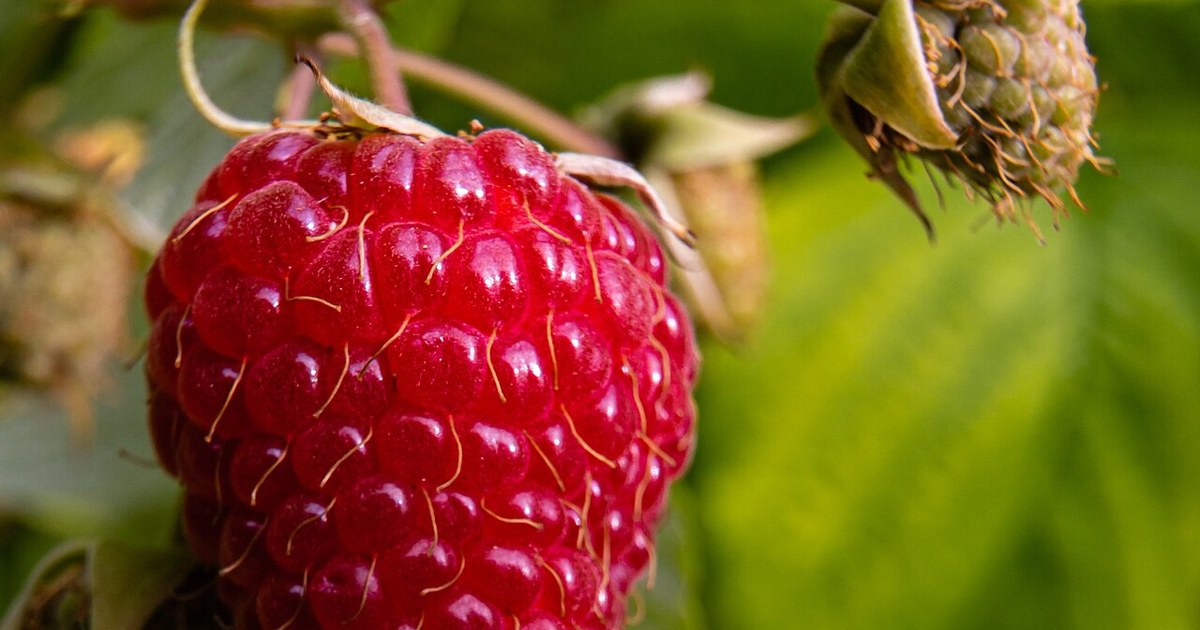
Raspberries are surprisingly well suited to a large pot. A single plant can produce fruit for years with sun, rich soil, and consistent moisture.
Summer-fruiting vs autumn-fruiting
Summer-fruiting raspberries produce one crop in midsummer on canes that grew the previous year. Autumn-fruiting varieties produce from late summer to the first frost on canes that grew in the current season. For a container, autumn-fruiting types are easier because you cut all the canes down each winter and start fresh.
Compact varieties such as ‘Raspberry Shortcake’ and ‘Ruby Beauty’ are bred for pots and stay under 3 feet tall. Standard varieties can be grown in a large container with support, but they are more work.
Pot size and soil
Use a pot at least 16 inches wide and deep, holding 10 to 15 gallons of soil. Raspberries are vigorous and need room for their roots. A smaller pot dries out quickly and limits the crop. Fabric pots work well because they air-prune the roots and prevent circling.
Use a rich, well-drained potting mix with plenty of compost. Raspberries prefer a pH between 5.5 and 6.5. Add a slow-release fertilizer at planting, and top-dress with compost each spring. Avoid waterlogged soil, which causes root rot.
Planting and support
Plant in early spring or autumn, setting the cane at the same depth it grew in its nursery pot. Water well after planting and mulch with 2 inches of organic material, keeping it away from the stem. Raspberries spread by suckers; in a pot, remove any that appear outside the main clump.
Even compact varieties benefit from a small cage or stake, since a pot of fruit-laden canes can topple in wind. Tie the canes loosely to the support as they grow.
Watering and feeding
Raspberries are shallow-rooted and need consistent moisture. Water when the top inch of soil feels dry, and water deeply until it drains. In summer that may mean every two or three days. Mulch helps hold moisture but does not replace watering.
Feed in early spring with a balanced fertilizer, and again after the first harvest if the plant looks tired. Avoid high-nitrogen feeds, which produce leafy growth at the expense of fruit. A top-dressing of compost in spring is usually enough for established plants.
Pruning
For autumn-fruiting varieties, cut all canes to the ground in late winter. New canes will grow in spring and fruit in late summer. For summer-fruiting varieties, remove the canes that fruited immediately after harvest, leaving the new green canes to fruit next year.
Thin canes to 4 to 6 per pot, removing the weakest and any that are damaged or diseased. Good airflow reduces disease. Remove suckers that grow outside the main clump.
Winter care
In cold regions, move the pot into an unheated garage or shed for winter, or wrap it in burlap and insulate with leaves. Water occasionally so the soil does not dry completely. Bring the plant back into the sun in early spring and resume normal care.
Common problems
Aphids cluster on new growth and can spread virus. Rinse them off with water or use insecticidal soap. Spider mites appear in dry, warm conditions. Cane blight and root rot are the main diseases; good drainage and airflow prevent them. Birds take ripe fruit; net the plant once berries start to colour.
Harvesting
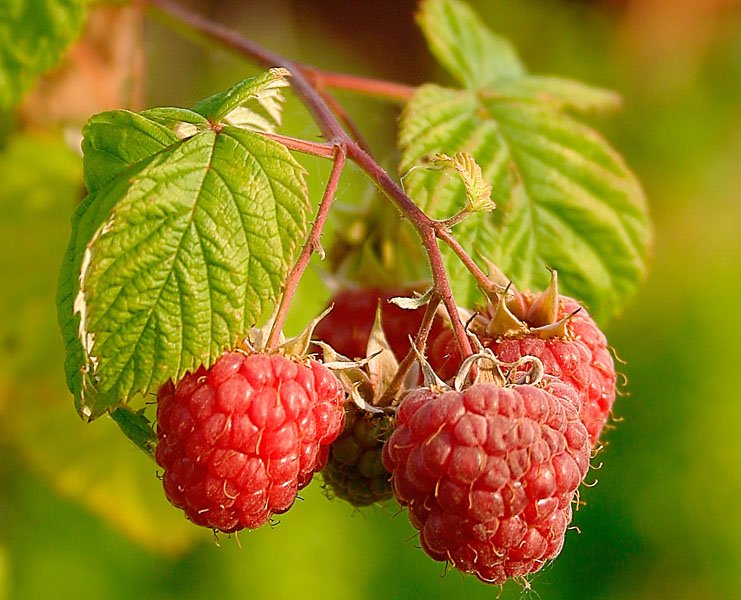
Pick when the berry is fully coloured and comes away from the plug with a gentle tug. Ripe fruit does not keep, so pick every day or two in peak season. Store in the refrigerator and use within two days, or freeze on a tray and transfer to a bag.
Field notes and finer details
Summer vs autumn fruiting
Summer-fruiting raspberries crop in midsummer on last year’s canes. Autumn-fruiting types crop from late summer on current-season canes and are easier in containers because you cut all canes down each winter.
Pruning
For autumn-fruiting varieties, cut all canes to the ground in late winter. For summer-fruiting, remove fruited canes after harvest and leave new green canes. Thin to 4 to 6 canes per pot.
Winter care
In cold regions, move the pot to shelter or wrap it in burlap. Water occasionally through winter. Bring it back into the sun in early spring.
Feeding and watering
Raspberries are shallow-rooted and need consistent moisture. Water when the top inch of soil feels dry, and water deeply until it drains. In summer that may mean every two or three days. Mulch helps hold moisture.
Feed in early spring with a balanced fertilizer, and again after the first harvest if the plant looks tired. Avoid high-nitrogen feeds. A top-dressing of compost in spring is usually enough for established plants.
Choosing a variety
Summer-fruiting raspberries produce one crop in midsummer on canes that grew the previous year. Autumn-fruiting varieties produce from late summer to the first frost on canes that grew in the current season. For a container, autumn-fruiting types are easier because you cut all the canes down each winter.
Compact varieties such as ‘Raspberry Shortcake’ are bred for pots and stay under 3 feet tall. Standard varieties can be grown in a large container with support, but they are more work.
Plant in early spring or autumn, setting the cane at the same depth it grew in its nursery pot. Water well after planting and mulch with 2 inches of organic material, keeping it away from the stem.
Common problems
Aphids cluster on new growth and can spread virus. Rinse them off with water or use insecticidal soap. Spider mites appear in dry, warm conditions. Cane blight and root rot are the main diseases; good drainage and airflow prevent them.
Birds take ripe fruit; net the plant once berries start to colour. Remove any diseased canes promptly to protect the rest of the plant.
Common questions
Which raspberry variety suits a pot?
Compact autumn-fruiting varieties such as 'Raspberry Shortcake'.
How big a pot do raspberries need?
At least 16 inches wide and deep, holding 10 to 15 gallons.
Do raspberries need support in a pot?
Even compact varieties benefit from a small cage or stake.