
Blueberries are one of the best fruits for a container. They stay compact, produce for years, and need only sun, acidic soil, and consistent moisture.
Why containers suit blueberries
Blueberries need acidic soil with a pH between 4.5 and 5.5. In a pot you control the mix completely, which is difficult in many garden soils. A container also keeps the roots in the right conditions and makes it easy to move the plant for winter protection.
A mature blueberry bush in a pot produces 2 to 5 pounds of fruit a year. With two or three varieties that ripen at different times, you can pick berries over six to eight weeks.
Choosing a variety
Half-high varieties such as ‘Northsky’ and ‘Polaris’ are compact and cold-hardy, suited to northern climates. Southern highbush varieties such as ‘Sunshine Blue’ tolerate warmer winters. Rabbiteye types such as ‘Tifblue’ need a long growing season and suit the southern United States.
Buy at least two different varieties that bloom at the same time. Blueberries set more fruit with cross-pollination even though some varieties are self-fertile. Choose varieties with staggered ripening if you want a longer harvest.
Pot size and soil mix
Start with a pot at least 12 inches wide and deep for a young plant. Move up to 18 to 24 inches as it grows. Blueberries have shallow, fibrous roots and do not like to be crowded, but a pot that is too large stays wet and can rot the roots.
Use a mix designed for acid-loving plants: equal parts peat moss or coco coir, pine bark fines, and perlite. Do not use standard potting mix, which is too alkaline. Test the pH of the mix before planting and adjust with elemental sulfur if needed. Avoid limestone, which raises the pH.
Planting and placement
Set the plant at the same depth it grew in its nursery pot. Planting too deep buries the crown and invites rot. Water well after planting and mulch with 2 inches of pine needles or shredded bark, keeping it away from the stem.
Place the pot in full sun for the best fruit. In hot climates, afternoon shade prevents leaf scorch. Blueberries need at least 6 hours of direct sun. Keep the pot where you can reach it for picking and watering.
Watering and feeding
Blueberries are shallow-rooted and dry quickly in a pot. Water when the top inch of soil feels dry, and water deeply until it drains. In summer that may mean every two or three days. Mulch helps hold moisture but does not replace watering.
Feed with a fertilizer formulated for acid-loving plants, such as one for azaleas or rhododendrons. Apply in early spring and again after harvest. Avoid high-nitrogen fertilizers, which push leaf growth at the expense of fruit. Do not use manure, which is too alkaline.
Pruning and winter care
Prune in late winter while the plant is dormant. Remove dead, damaged, and crossing branches. On mature plants, cut one or two of the oldest canes to the ground each year to encourage new growth. Fruit forms on one-year-old wood, so do not remove all the new shoots.
In cold regions, move the pot into an unheated garage or shed for winter, or wrap it in burlap and insulate with leaves. The roots are less hardy than the top growth. Water occasionally through winter so the soil does not dry completely. Bring the plant back into the sun in early spring.
Common problems
Yellow leaves with green veins indicate iron chlorosis, caused by soil that is too alkaline. Lower the pH with elemental sulfur and use an acid fertilizer. Birds take ripe fruit quickly; cover the plant with netting once berries start to colour. Mummy berry and powdery mildew are the main diseases; good airflow and clean-up of fallen fruit reduce them.
Harvesting
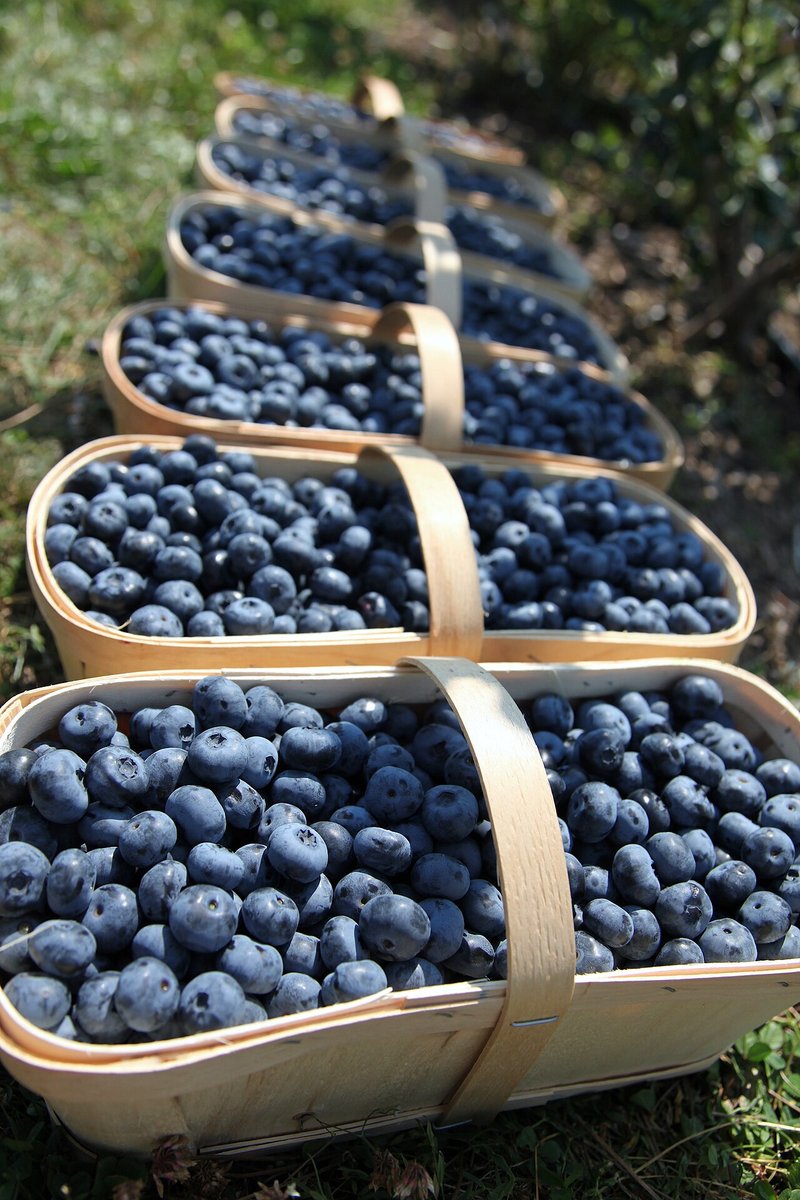
Berries ripen over several weeks. Pick when they are fully blue with no red at the stem and come off with a gentle tug. Ripe berries store for a week in the refrigerator. A plant that is stressed by drought will drop fruit before it ripens, so keep watering consistent as harvest approaches.
Field notes and finer details
Soil acidity
Blueberries need acidic soil with a pH between 4.5 and 5.5. Use a mix of peat moss or coco coir, pine bark fines, and perlite. Test the pH before planting and adjust with elemental sulfur if needed.
Watering and feeding
Water when the top inch of soil feels dry, and water deeply until it drains. Feed with a fertilizer formulated for acid-loving plants in early spring and after harvest. Avoid high-nitrogen fertilizers and manure.
Winter care
In cold regions, move the pot into an unheated garage or shed for winter, or wrap it in burlap. Water occasionally through winter so the soil does not dry completely.
Year-round care calendar
In early spring, check the pH and apply an acid fertilizer as growth resumes. In late spring, protect flowers from late frosts with a fleece cover if a cold snap is forecast. In summer, water consistently and net the plant before birds find the fruit. In autumn, remove any remaining fruit and check for pests. In winter, move the pot to shelter and water occasionally.
A plant that is not producing may be too young, in soil that is too alkaline, or short of sun. Check these three factors before replacing it. Blueberries are long-lived and usually improve with age once established.
Common questions
How many blueberry plants do I need?
At least two different varieties that bloom at the same time for good cross-pollination.
Can blueberries grow in standard potting mix?
No. Standard mix is too alkaline. Use a mix designed for acid-loving plants.
How long until a potted blueberry produces fruit?
Usually one to two years after planting, with full production by year three.