
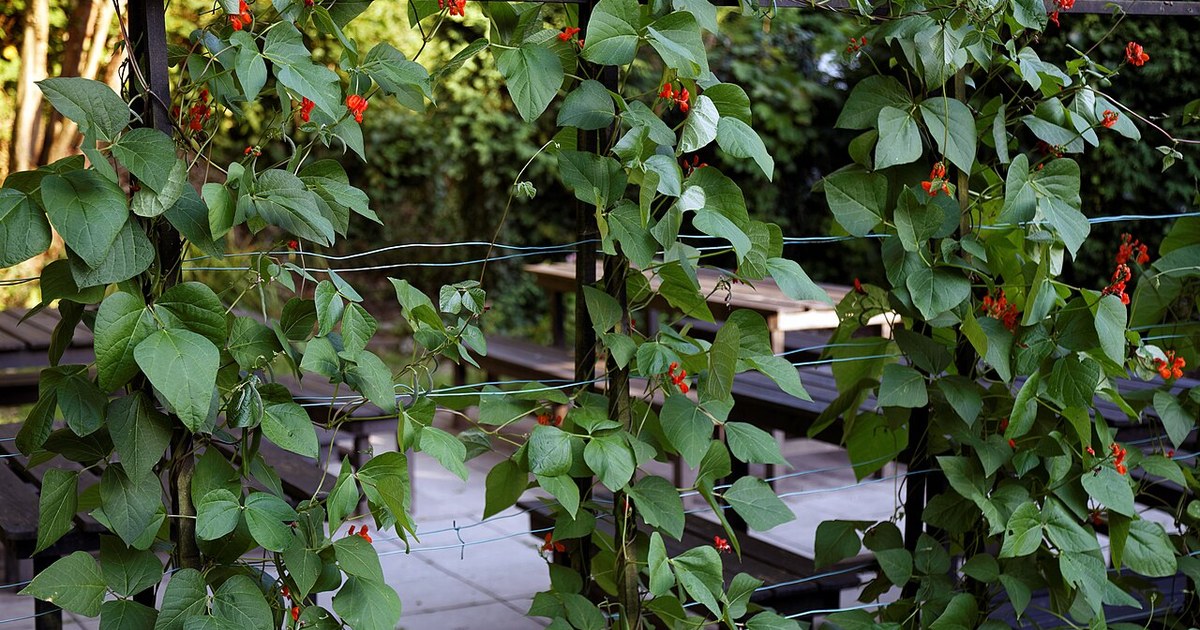
A trellis turns a row of beans into a vertical crop. The beans stay clean and straight, and the plants produce more in the same space.
Pole beans vs bush beans
Pole beans are the natural choice for a trellis. They climb 6 to 10 feet and produce over a long season. Bush beans stay compact and do not need support, though they can be grown on a short fence. If you want a trellis crop, choose a pole variety such as ‘Kentucky Wonder’, ‘Blue Lake’, or ‘Scarlet Runner’.
Pole beans take longer to start producing than bush beans but keep going until frost. A single planting gives a steady harvest for weeks, whereas bush beans produce all at once.
Choosing and building a trellis
The support must be strong enough to carry the weight of a full crop in wind. A frame of two posts with a crossbar and vertical strings works well. Cattle panels, heavy netting, or horizontal wires between sturdy posts also suit. Thin netting sags and tears within a season.
Set posts 18 inches into the ground and leave 3 to 4 feet between rows so you can walk through and pick from both sides. The trellis should be 6 to 8 feet tall. Place it on the north side of the bed so it does not shade neighbouring plants.
Soil and planting
Beans fix their own nitrogen, so they need little fertilizer. In fact, too much nitrogen produces leaves instead of pods. Plant in soil that is well-drained and moderately fertile, with a pH between 6.0 and 7.0. Add compost before planting but skip high-nitrogen fertilizer.
Sow seed directly once the soil has warmed to about 60°F (16°C). Plant seeds 1 inch deep and 3 to 4 inches apart at the base of the support. Sow a few extra seeds and thin to the strongest seedlings. Beans do not transplant well, so avoid starting them indoors.
Training the vines
Beans climb by twining, and they usually find the support on their own. Guide the first few inches onto the string or netting if they stray. Once attached, they climb steadily. Check ties if you use them, since a tight tie can cut into a swelling stem.
Keep the base of the plant clear of weeds and mulch once the soil has warmed. Water at soil level to keep the leaves dry and reduce disease. A drip line along the row works well for a vertical planting.
Watering and feeding
Beans need about an inch of water a week, more in hot weather. Keep the soil evenly moist, especially during flowering and pod set. Irregular watering causes pods to be tough and misshapen. Water early in the day so the foliage dries before night.
Feed only if the plants look pale or growth is slow. A side-dressing of compost or a light application of a low-nitrogen fertilizer is enough. Avoid high-nitrogen feeds, which reduce pod production.
Pests and diseases
Mexican bean beetles chew holes in leaves and can reduce yields. Hand-pick the adults and yellow egg clusters on the undersides of leaves. Row cover over young plants keeps beetles out until flowering. Aphids cluster on new growth and can be rinsed off with water.
Rust and anthracnose are fungal diseases that spread in wet weather. Space plants for airflow, water at the base, and remove affected leaves. Do not work among wet plants. Rotate beans out of the same bed for at least two years.
Harvesting
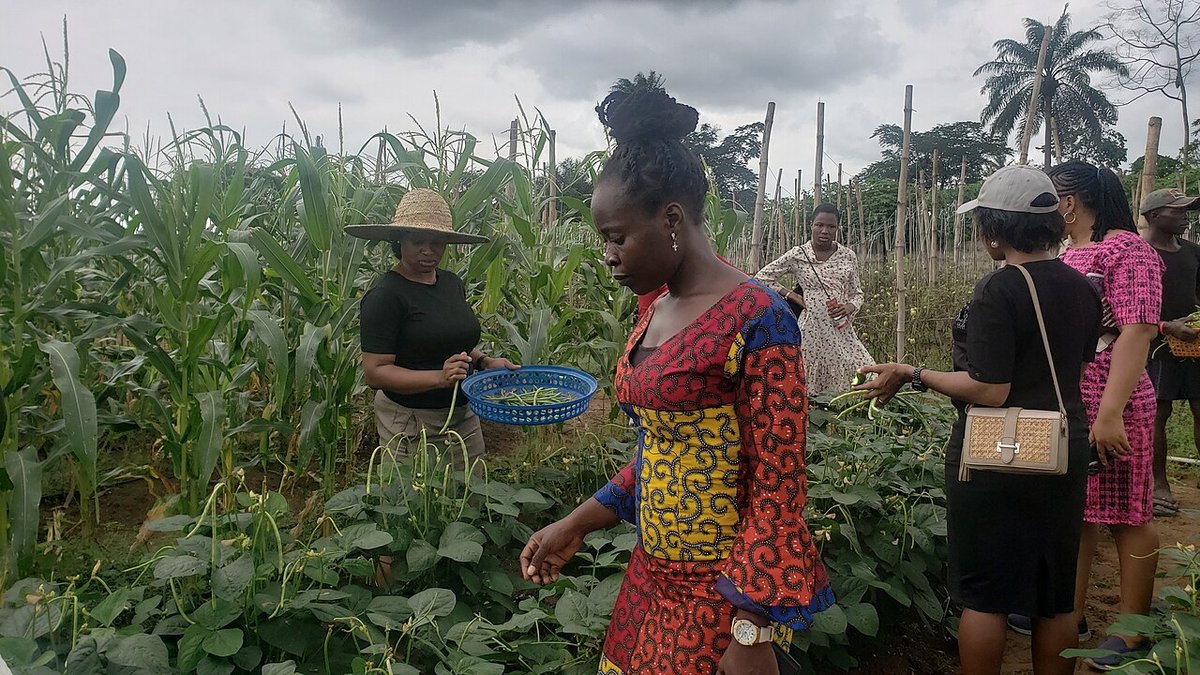
Pick pods when they are firm and crisp, before the seeds inside bulge. Check the plants every two or three days in peak season. Leaving mature pods on the vine signals the plant to stop producing. Cut pods from the vine with scissors rather than pulling, which can damage the stem.
A trellis makes picking easier and keeps the pods clean. Harvest in the morning when the beans are cool and crisp. Store them in the refrigerator and use within a few days for the best flavour.
Field notes and finer details
Pole beans vs bush beans
Pole beans climb 6 to 10 feet and produce over a long season. Bush beans stay compact and produce all at once. Choose a pole variety for a trellis.
Support and training
Use a strong frame of posts and strings or netting, 6 to 8 feet tall. Beans climb by twining and usually find the support on their own.
Harvesting
Pick pods when firm and crisp, before the seeds bulge. Check every two or three days. Leaving mature pods on the vine stops production.
Pests and harvest
Mexican bean beetles chew holes in leaves. Hand-pick the adults and yellow egg clusters on the undersides of leaves. Row cover over young plants keeps beetles out until flowering. Aphids cluster on new growth and can be rinsed off with water.
Pick pods when firm and crisp, before the seeds bulge. Check every two or three days. Leaving mature pods on the vine stops production. Cut pods with scissors rather than pulling, which damages the stem.
Support and training
Use a strong frame of posts and strings or netting, 6 to 8 feet tall. Beans climb by twining and usually find the support on their own. Guide the first few inches onto the string if they stray. Check ties if you use them, since a tight tie can cut into a swelling stem.
Keep the base of the plant clear of weeds and mulch once the soil has warmed. Water at soil level to keep the leaves dry and reduce disease. A drip line along the row works well for a vertical planting.
Common questions
Do green beans need a trellis?
Pole varieties do; bush varieties do not.
How tall should a bean trellis be?
6 to 8 feet for pole beans.
Can I grow beans in the same bed every year?
No. Rotate them out for at least two years to prevent disease.