
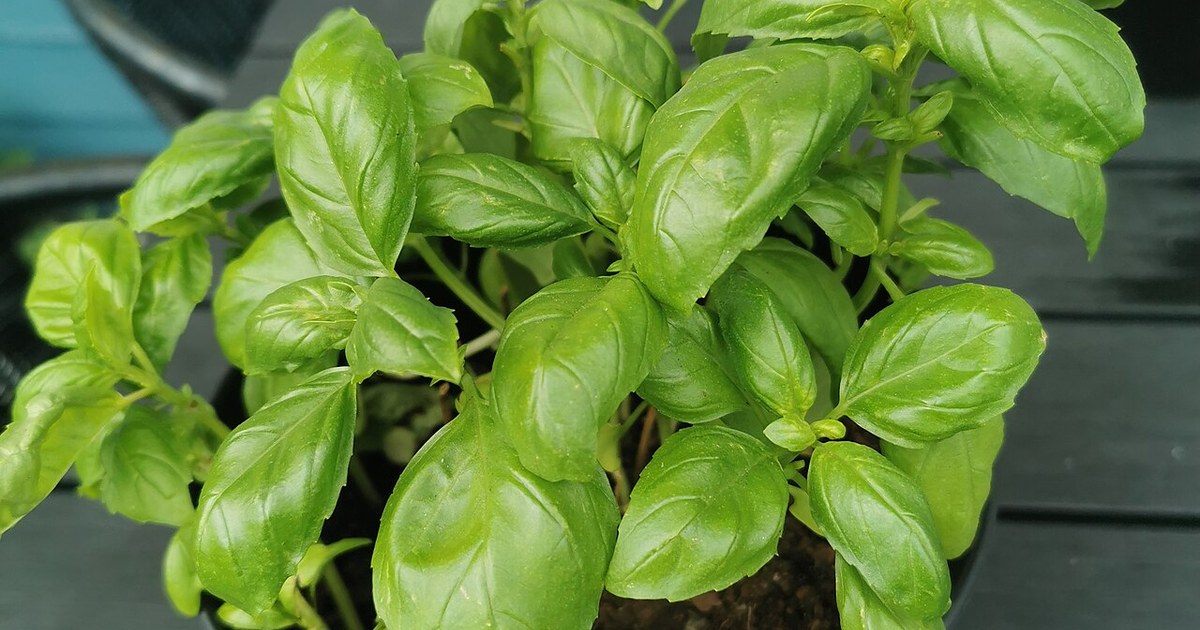
Basil is a warm-season herb that thrives indoors with bright light and regular harvesting. A single pot can supply fresh leaves for months.
Light and temperature
Basil needs bright light and a suitable temperature for healthy growth. A sunny windowsill or grow light keeps the plant compact and productive. Good air circulation reduces disease.
Soil and watering
Use a standard potting mix with good drainage. Water when the top inch of soil feels dry, and water thoroughly until it drains. Empty the saucer after watering. Avoid waterlogging, which causes root rot.
Harvesting
Begin harvesting when the plant is well established. Cut outer leaves or sprigs with scissors, leaving the centre to grow. Take no more than a third at a time. Regular harvesting keeps the plant productive.
Common problems
Aphids and spider mites can appear in dry conditions. Rinse the plant with water or use insecticidal soap. Powdery mildew appears in humid, still air; improve airflow. Yellow leaves usually mean overwatering.
Field notes and finer details
Light and temperature
Basil needs at least 6 hours of direct sun. A south-facing window is ideal. In winter, use a grow light for 12 to 14 hours. It prefers 70 to 80°F and dislikes cold drafts.
Pruning and harvest
Pinch the tips regularly to encourage branching. Remove flower buds before they open. Harvest no more than a third at a time. Regular picking keeps the plant compact and productive.
Propagation
Basil roots easily from cuttings in water. Take a 4 inch stem, remove lower leaves, and place in water. Roots appear in one to two weeks.
Light and temperature
Basil needs at least 6 hours of direct sun. A south-facing window is ideal. In winter, use a grow light for 12 to 14 hours. It prefers 70 to 80°F (21-27°C) and dislikes cold drafts. Good air circulation reduces disease.
Soil and watering
Use a standard potting mix with good drainage. Water when the top inch is dry, and water thoroughly. Basil wilts quickly in a dry pot but recovers after watering. Empty the saucer after watering to prevent root rot.
Pruning and harvest
Pinch the tips regularly to encourage branching. Remove flower buds before they open to keep the plant producing leaves. Harvest no more than a third at a time. Regular picking keeps the plant compact and productive.
Common problems
Aphids and whiteflies cluster on new growth. Rinse them off with water. Downy mildew appears in humid conditions; improve airflow. Fusarium wilt causes wilting; use resistant varieties and fresh soil.
Propagation
Basil roots easily from cuttings in water. Take a 4 inch stem, remove lower leaves, and place in water. Roots appear in one to two weeks. Pot the cutting once roots are an inch long.
Light and temperature
Basil needs at least 6 hours of direct sun. A south-facing window is ideal. In winter, use a grow light for 12 to 14 hours. It prefers 70 to 80°F (21-27°C) and dislikes cold drafts. Good air circulation reduces disease.
Soil and watering
Use a standard potting mix with good drainage. Water when the top inch is dry, and water thoroughly. Basil wilts quickly in a dry pot but recovers after watering. Empty the saucer after watering to prevent root rot.
Pruning and harvest
Pinch the tips regularly to encourage branching. Remove flower buds before they open to keep the plant producing leaves. Harvest no more than a third at a time. Regular picking keeps the plant compact and productive.
Common problems
Aphids and whiteflies cluster on new growth. Rinse them off with water. Downy mildew appears in humid conditions; improve airflow. Fusarium wilt causes wilting; use resistant varieties and fresh soil.
Propagation
Basil roots easily from cuttings in water. Take a 4 inch stem, remove lower leaves, and place in water. Roots appear in one to two weeks. Pot the cutting once roots are an inch long.
Light and temperature
Basil needs at least 6 hours of direct sun. A south-facing window is ideal. In winter, use a grow light for 12 to 14 hours. It prefers 70 to 80°F (21-27°C) and dislikes cold drafts. Good air circulation reduces disease.
Soil and watering
Use a standard potting mix with good drainage. Water when the top inch is dry, and water thoroughly. Basil wilts quickly in a dry pot but recovers after watering. Empty the saucer after watering to prevent root rot.
Common problems
Aphids and whiteflies cluster on new growth. Rinse them off with water. Downy mildew appears in humid conditions; improve airflow. Fusarium wilt causes wilting; use resistant varieties and fresh soil.
Light and temperature
Basil needs at least 6 hours of direct sun. A south-facing window is ideal. In winter, use a grow light for 12 to 14 hours. It prefers 70 to 80°F (21-27°C) and dislikes cold drafts. Good air circulation reduces disease.
Soil and watering
Use a standard potting mix with good drainage. Water when the top inch is dry, and water thoroughly. Basil wilts quickly in a dry pot but recovers after watering. Empty the saucer after watering to prevent root rot.
Propagation
Basil roots easily from cuttings in water. Take a 4 inch stem, remove lower leaves, and place in water. Roots appear in one to two weeks. Pot the cutting once roots are an inch long.
Harvesting
Pinch the tips regularly to encourage branching. Remove flower buds before they open. Harvest no more than a third at a time. Regular picking keeps the plant compact and productive.
Harvesting
Pinch the tips regularly to encourage branching. Remove flower buds before they open. Harvest no more than a third at a time. Regular picking keeps the plant compact and productive.
Propagation
Basil roots easily from cuttings in water. Take a 4 inch stem, remove lower leaves, and place in water. Roots appear in one to two weeks. Pot the cutting once roots are an inch long.
Common questions
Can basil grow in low light?
No, it needs at least 6 hours of direct sun or a grow light.
Why does my basil flower?
Heat and long days trigger flowering. Remove buds to extend leaf production.
How often should I water basil?
When the top inch of soil is dry.